TikTok accounts use AI-generated videos to incite anti-government protests in Moldova
A coordinated network disseminated and amplified AI-generated videos to delegitimize ruling party and mobilize offline activity
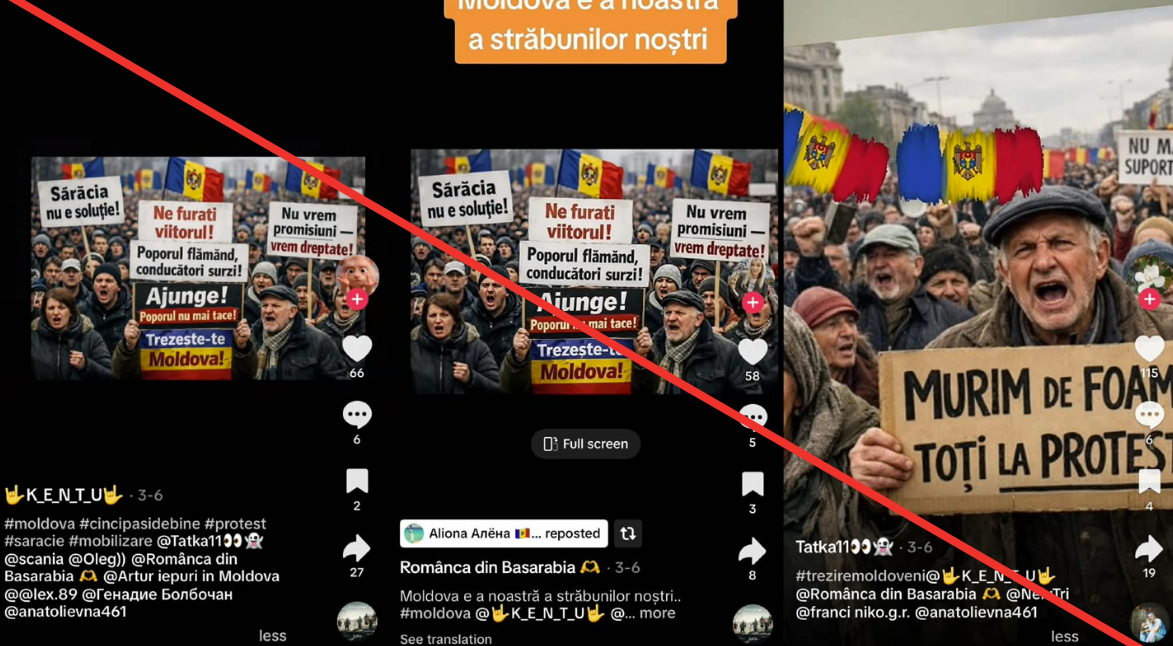
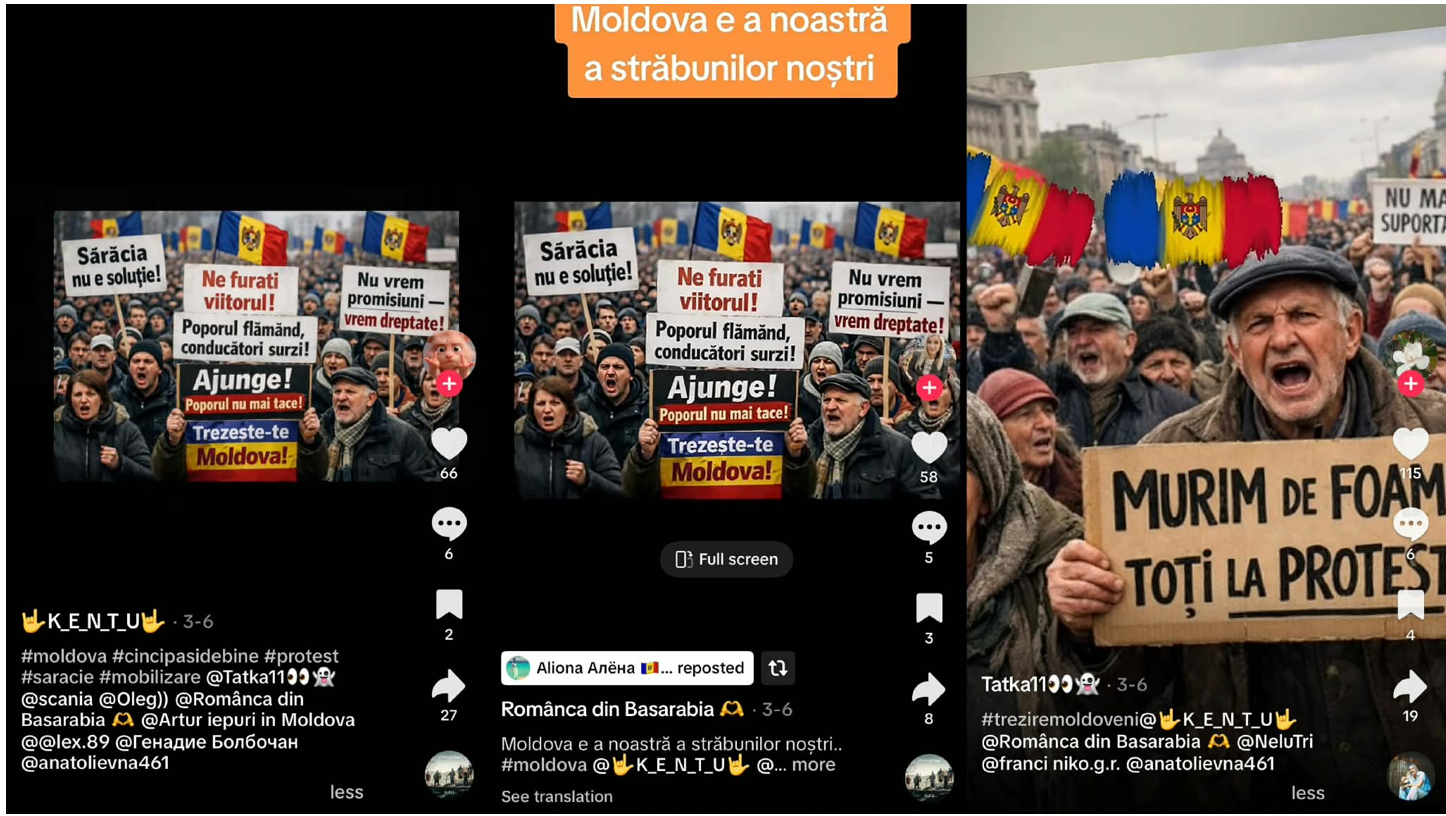
BANNER: Screenshots of AI-generated protest imagery. (Source: @ k_e_n_t_u_01, left; @romanca.basarabia, center; @tatka11,right)
A network of at least twenty-five TikTok accounts appeared to coordinate the dissemination and amplification of AI-generated content that targeted Moldova’s ruling Party of Action and Solidarity (PAS) and the country’s president, Maia Sandu. It also sought to mobilize residents to participate in protests scheduled for March 25, which ultimately did not take place. The activity drew the attention of Moldovan law enforcement, which assessed it as a potential destabilization effort linked to coordinated online influence operations.
Following Moldova’s recent elections, Russia-aligned and covert influence operations have continued to target President Sandu and PAS, seeking to undermine their legitimacy and erode public trust in pro-European leadership.
Coordinated inauthentic behavior
The TikTok accounts displayed clear visual and behavioral similarities. A majority used identical or near-identical profile pictures, which depicted the coat of arms of Moldova and the label “Suveraniștii Moldovei” (Moldovan sovereigntists). Other accounts used closely related imagery.
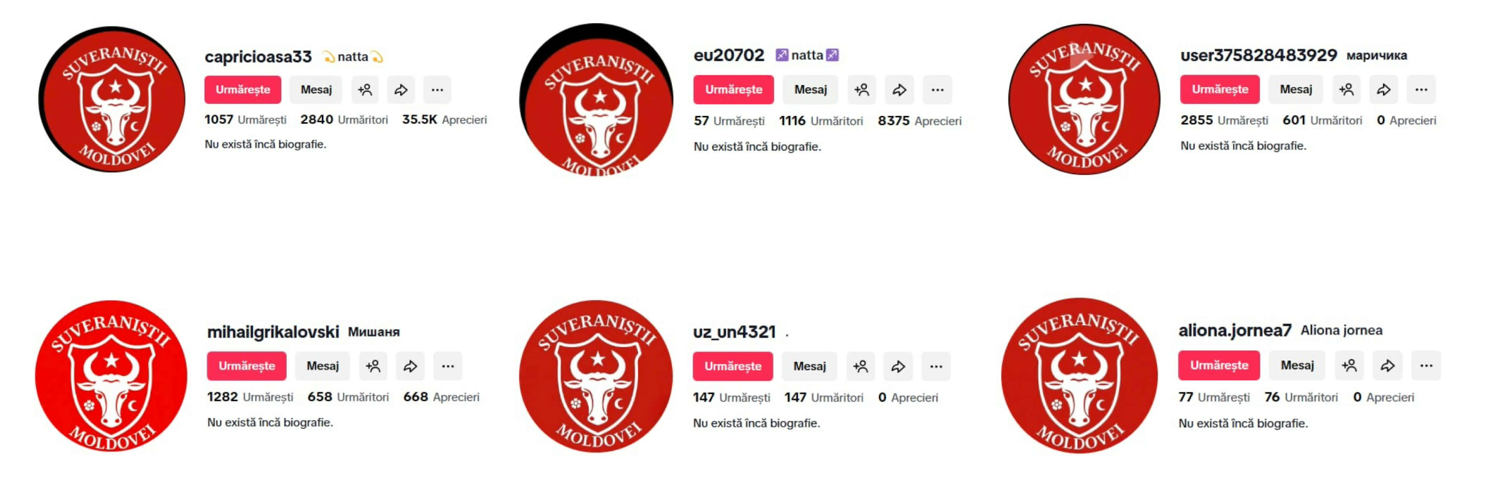
The activity began in late February and was ongoing at the time of writing. Analysis of behavioral patterns identified three types of accounts involved in the activity: 1) a content-producing account (seeder); 2) an amplification account; and 3) an influencer who helped the seeder extend reach outside of the core network.
The seeder accounts primarily published AI-generated videos that depicted fabricated and angered protest scenes in Moldova. These videos often featured synthetic crowds and called for citizens to join anti-government demonstrations.
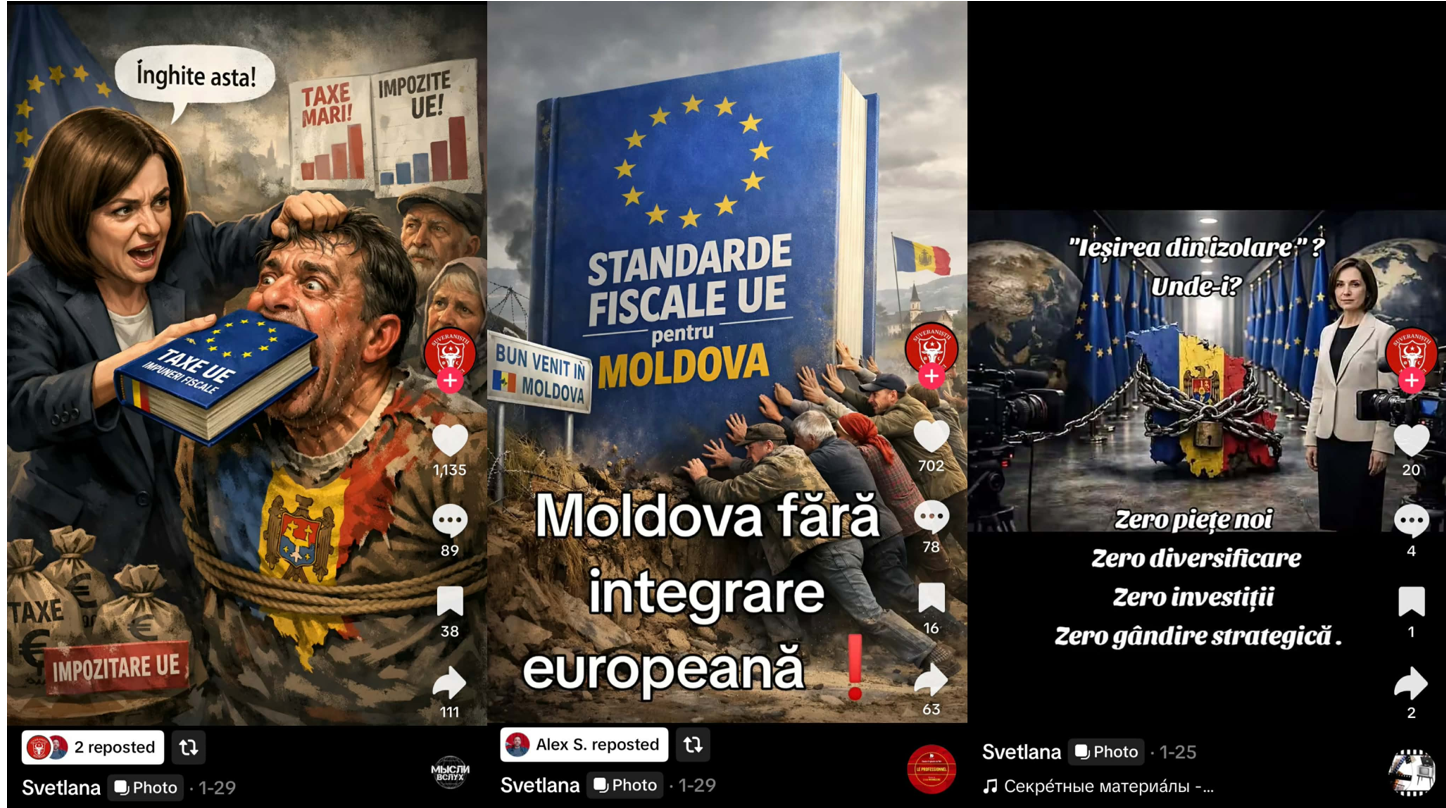
In addition to promoting narratives that the ruling party, PAS, was corrupt, illegitimate, and should be replaced through early elections, the network also amplified allegations that pro-Russian political actors, primarily the Socialist Party (PSRM) and its leader, Igor Dodon, were covertly collaborating with PAS. The content framed such claims as a betrayal of the electorate. Additional narratives suggested that Moldova should pursue a pro-Russian foreign policy rather than EU integration and framed protests as a purely civic initiative with no political backing.
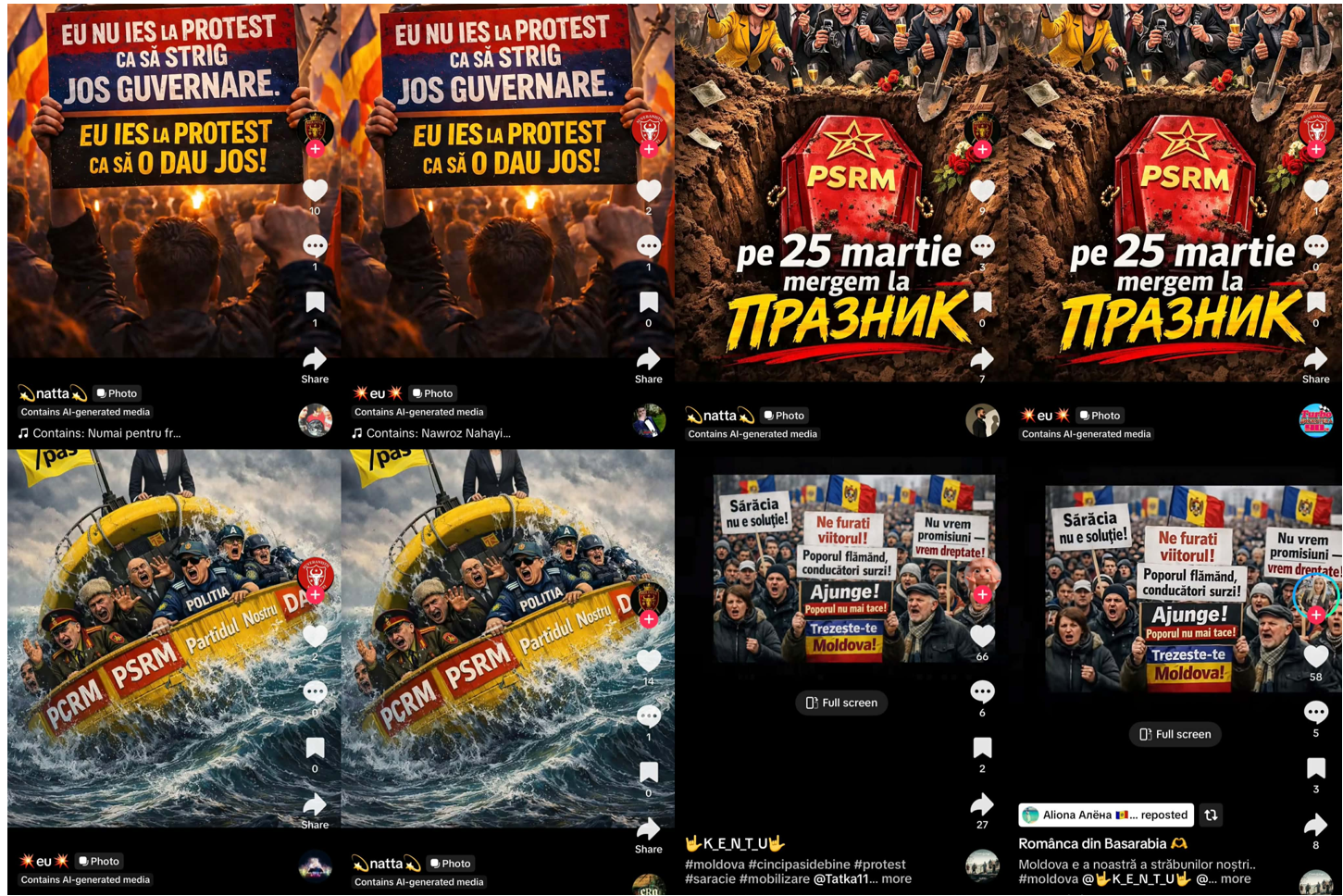
Across the accounts, some videos included the repeated use of generic hashtags such as #Moldova, #protest, and #mobilization.
The DFRLab used the monitoring tools Exolyt and Junkipedia to evaluate the performance, coordination, and reach of the content and to measure engagement metrics via publicly available social media data. Engagement levels varied significantly across the accounts. They ranged from low-engagement profiles to highly visible content that received hundreds of thousands of views.
Influencers expand campaign’s reach
Beyond inauthentic accounts, the activity also appeared to involve locally known TikTok influencers who previously expressed anti-EU and pro-Russian positions. Several of these individuals were directly mentioned in the descriptions of the initial protest-related posts published in February. This activity suggested an initial coordination or targeting phase before wider amplification and dissemination. These influencers reshared or reproduced protest calls on their own accounts. That significantly increased the reach of the campaign and extended it to broader, organically built audiences.
The view counts across the analyzed protest videos ranged from hundreds to hundreds of thousands, based on the DFRLab’s access to publicly available TikTok data. The follower count of the analyzed accounts varied significantly. It ranged from as few as six followers to several hundred or thousands. In some cases, it reached tens of thousands. The highest follower count and overall engagement were observed among the influencer accounts. For example, according to publicly available TikTok data via Junkipedia, Românca din Basarabia 🫶, Tatka11👀👻, and Andrei Turtureanu 🇲🇩 recorded total engagement levels of more than 13.2 million, 1.76 million, and 8.6 million, respectively, as of March 20.
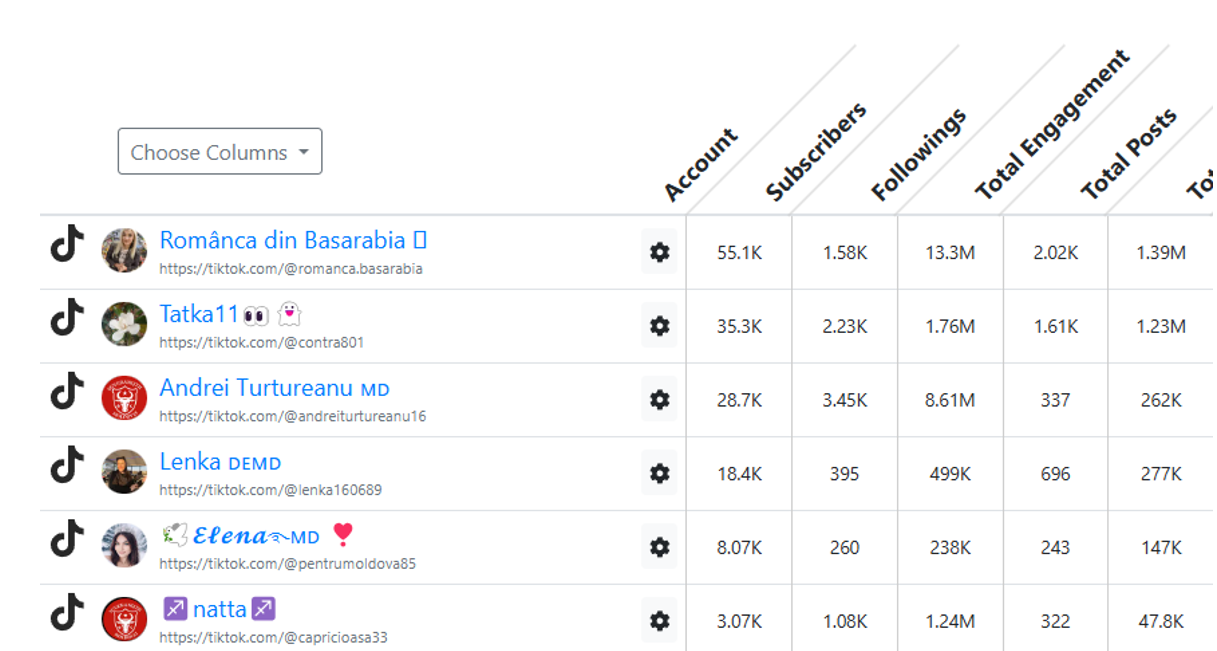
At the time of writing, the analyzed TikTok accounts together had 158,556 total followers. Engagement varies significantly across accounts, though total engagement surpassed 26.3 million across all types of engagement.
The accounts host a wide range of content. Not all videos are related to protests or anti-PAS narratives. Individual videos range from low to millions of views. The accounts primarily target a Romanian-speaking audience with additional outreach to Russian speakers. This bilingual approach broadens the campaign’s reach across linguistic communities in Moldova and enables engagement with distinct audience segments.
Following reporting by Moldovan police and media outlets that exposed accounts linked to the network, a number of previously published posts became unavailable or inaccessible on TikTok. It remains unclear whether the content was removed by TikTok because of platform policy violations or if it was deleted or restricted by the account operators.
Persistent pro-Russian and anti-EU influence ecosystem
The accounts involved in this activity were not newly created. They exhibited a longer posting history, which included sustained engagement in the dissemination of AI-generated content that promoted anti-EU and pro-Russia narratives. Their activity suggested previous positioning within a broader influence ecosystem that advocated for Moldova’s geopolitical alignment with Russia. This also suggested the protest mobilization was not an isolated event, but instead was part of a wider pattern of anti-EU and anti-PAS activity being undertaken by this network on TikTok.
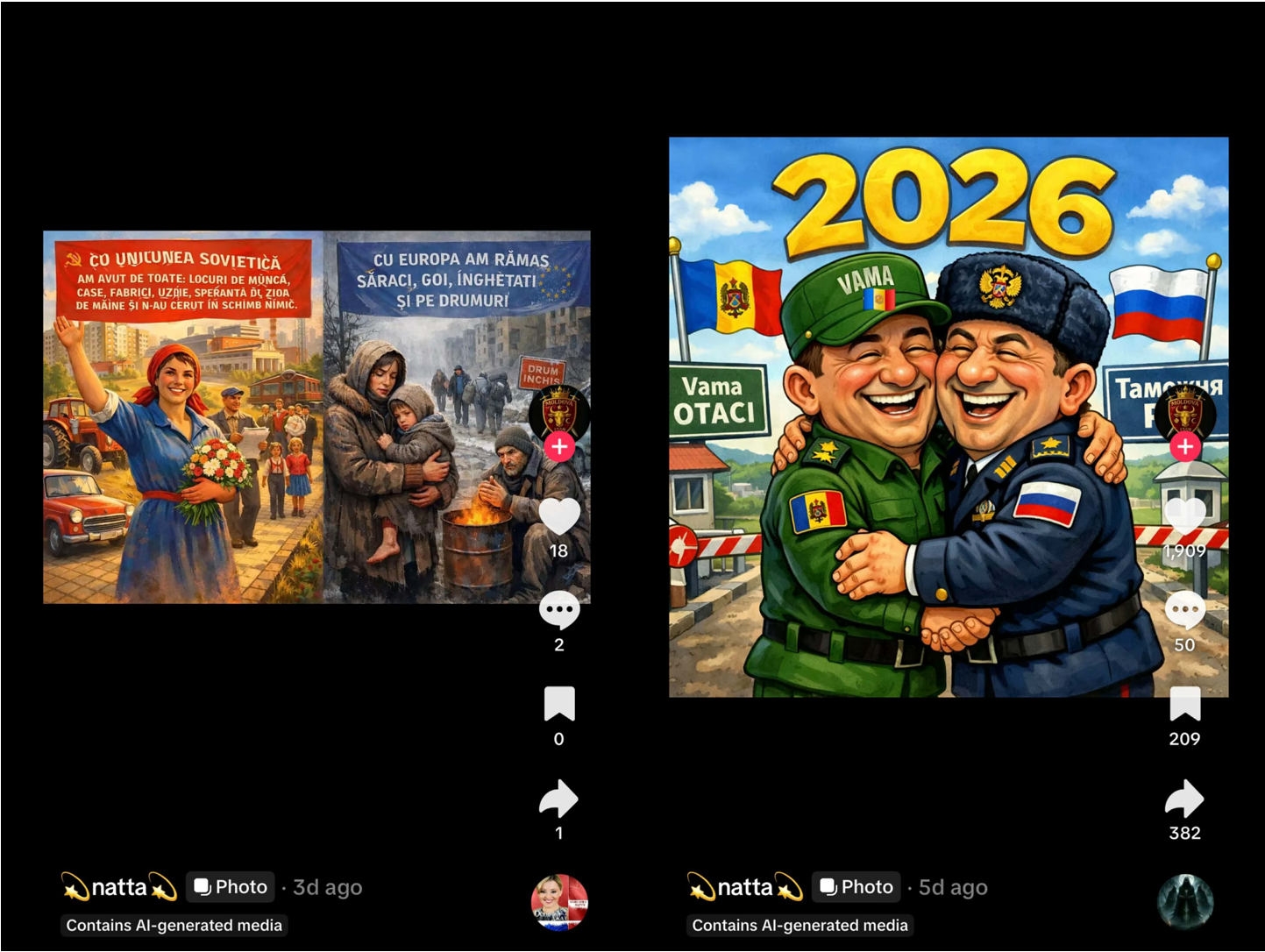
Another example of a broader anti-EU and pro-Russian campaign used AI-generated media to illustrate an idealized depiction of life during the Soviet Union. The imagery portrayed economic stability, employment, and social welfare in the Soviet Union, contrasted with a bleak representation of Moldova under its present European integration, characterized by poverty, hardship, and social decline. The posts are from one of the leading seeder accounts and were published in March 2026. This reinforces nostalgic pro-Soviet sentiment and discredits the country’s EU alignment.
A second post features an AI-generated caricature illustration of Moldovan and Russian border officers embracing at a shared checkpoint. Notably, Moldova and Russia do not share a direct border. The depiction of a joint Moldova-Russia checkpoint may imply that Ukrainian territory, which separates the two states, no longer exists. This visual framing indirectly normalizes the idea of expanded Russian territorial control over Ukraine and Moldova.
Parallel Russian-language campaign suggests expanded targeting
On March 12, a newly created TikTok account (@freemoldova0 – “За свободу”) began posting content exclusively focused on mobilizing people to attend a March 25 protest. The content is also AI-generated. But it differs stylistically from content produced by the previously identified network. This shift suggests either a separate production stream or a parallel effort.
A notable distinction between the two campaigns lies in language use. The earlier network primarily operated in Romanian. In the case of the protest network, three out of four posts with calls to action were published in Russian. This change in language indicates targeted outreach to a different audience segment and, potentially, a broadening of the campaign’s reach across linguistic communities.
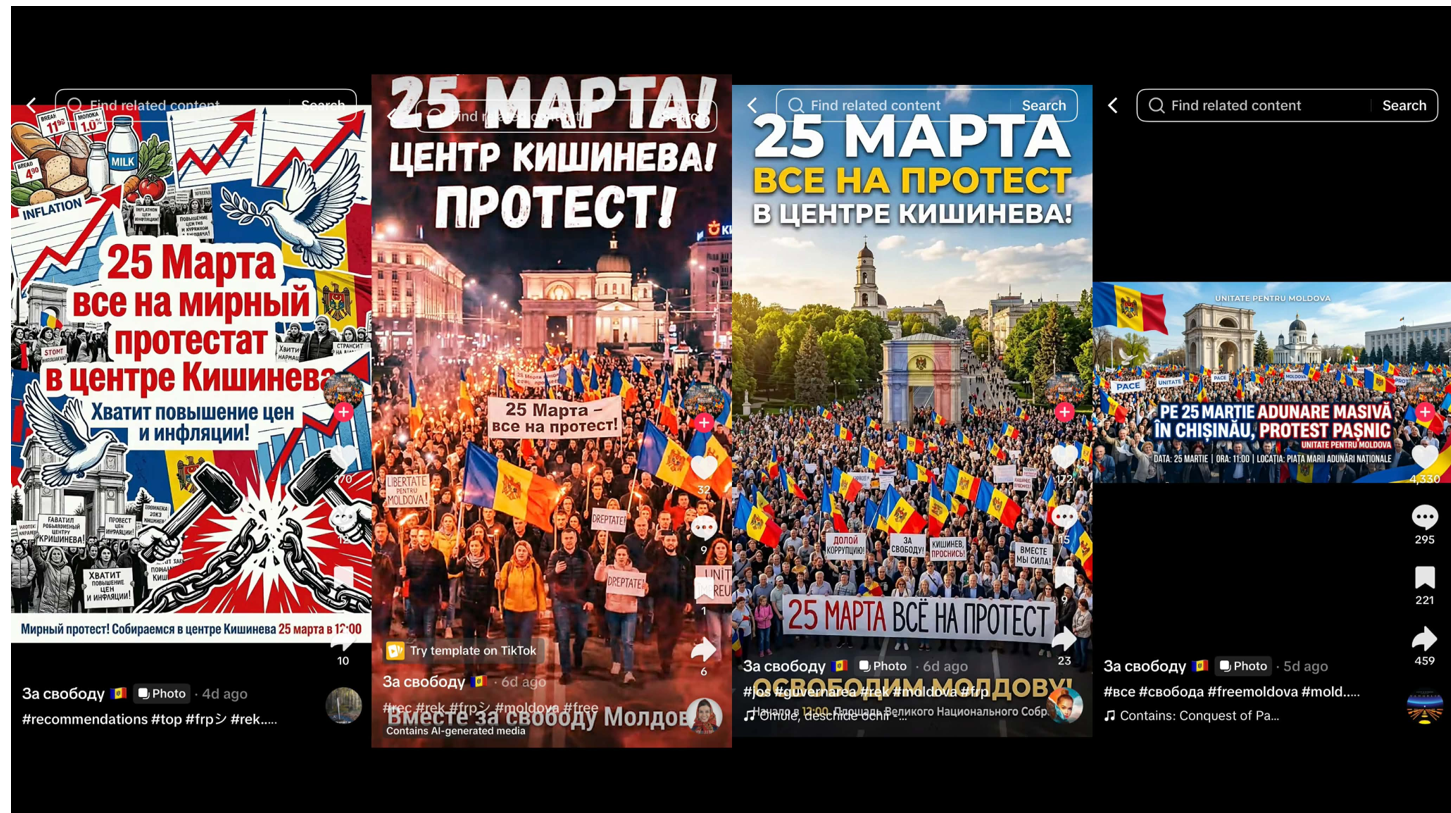
Despite its short life, the newly created account achieved significant traction in a short period of time. Within seven days, it accumulated over 140,000 views, nearly 6,000 likes, 338 comments, and 561 shares, based on the DFRLab’s analysis. It outperformed many of the previously identified accounts in terms of engagement. The rapid growth and high engagement levels suggested this account may have benefited from coordinated boosting or pre-existing network support.
March 25: No offline protest, but online activity persists
On March 25, no offline protest activity was recorded in Moldova. Despite the sustained and coordinated online mobilization campaign, the announced demonstrations did not materialize in the streets. However, online activity did not cease. Both seeder accounts and influencers within the identified network continued posting on that date, maintaining pressure and keeping the anti-PAS messaging active.
The images below illustrate the continued online activity on March 25. One TikTok post, shared by a seeder-connected account, overlaid protest imagery with anti-government slogans directed at President Sandu and PAS. A second post, from an influencer account, featured AI-generated crowd imagery alongside calls for a “national uprising” in Chisinau’s central square.
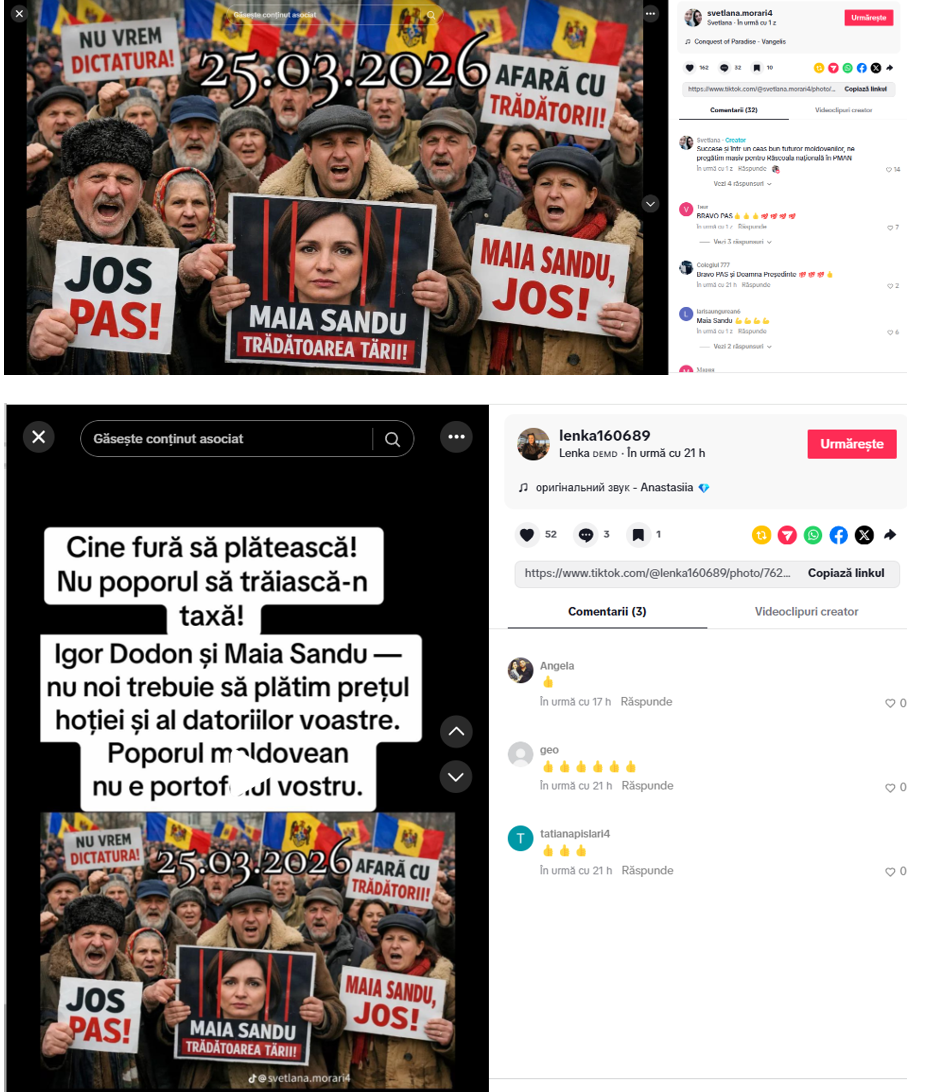
The failure of protests to materialize offline on March 25 does not signal the end of the campaign. Evidence of continued online posting on and after that date suggests the activity is evolving rather than concluding. The campaign appears to be transforming into a sustained, longer-term effort aimed at ousting PAS from power, with the March 25 date serving as a possible test of the network’s ability to mobilize people, rather than an endpoint.
Platform and regulatory context
The observed behavior appears to violate TikTok’s policies on platform integrity and political content. The platform’s Integrity and Authenticity Policy restricts deceptive practices that are designed to manipulate public discourse, including artificial amplification of political narratives. The structured division between “seeder” and “amplifier” accounts, alongside shared visual identity markers, suggests such coordination. The platform explicitly disallows covert influence operations. That includes efforts to manipulate public discourse through undisclosed coordination or deceptive amplification, as well as AI-generated content. It should be highlighted that only small parts of the videos were labelled AI-generated, while others – the majority of the protests-related ones – are not.
The activity raises concerns related to the organization and promotion of public assemblies. Under Moldovan law governing public gatherings (Law on Assemblies No. 26/2008), protests must be formally notified to authorities in advance. The Moldovan General Inspectorate of Police confirmed in their public statement that no such notification had been submitted. It warned that the online content promoting the protest may be linked to destabilization efforts.
Cite this case study:
Victoria Olari and Eto Buziashvili, “TikTok accounts use AI-generated videos to incite anti-government protests in Moldova,” Digital Forensic Research Lab (DFRLab), April 2, 2026, https://dfrlab.org/2026/04/02/tiktok-accounts-use-ai-generated-videos-to-incite-anti-government-protests-in-moldova/.