Gagauznews rebrands to launder sanctioned content into Moldova
A rebrand to Media Pulse Moldova allowed the operation to continue amplifying sanctioned content
Gagauznews rebrands to launder sanctioned content into Moldova
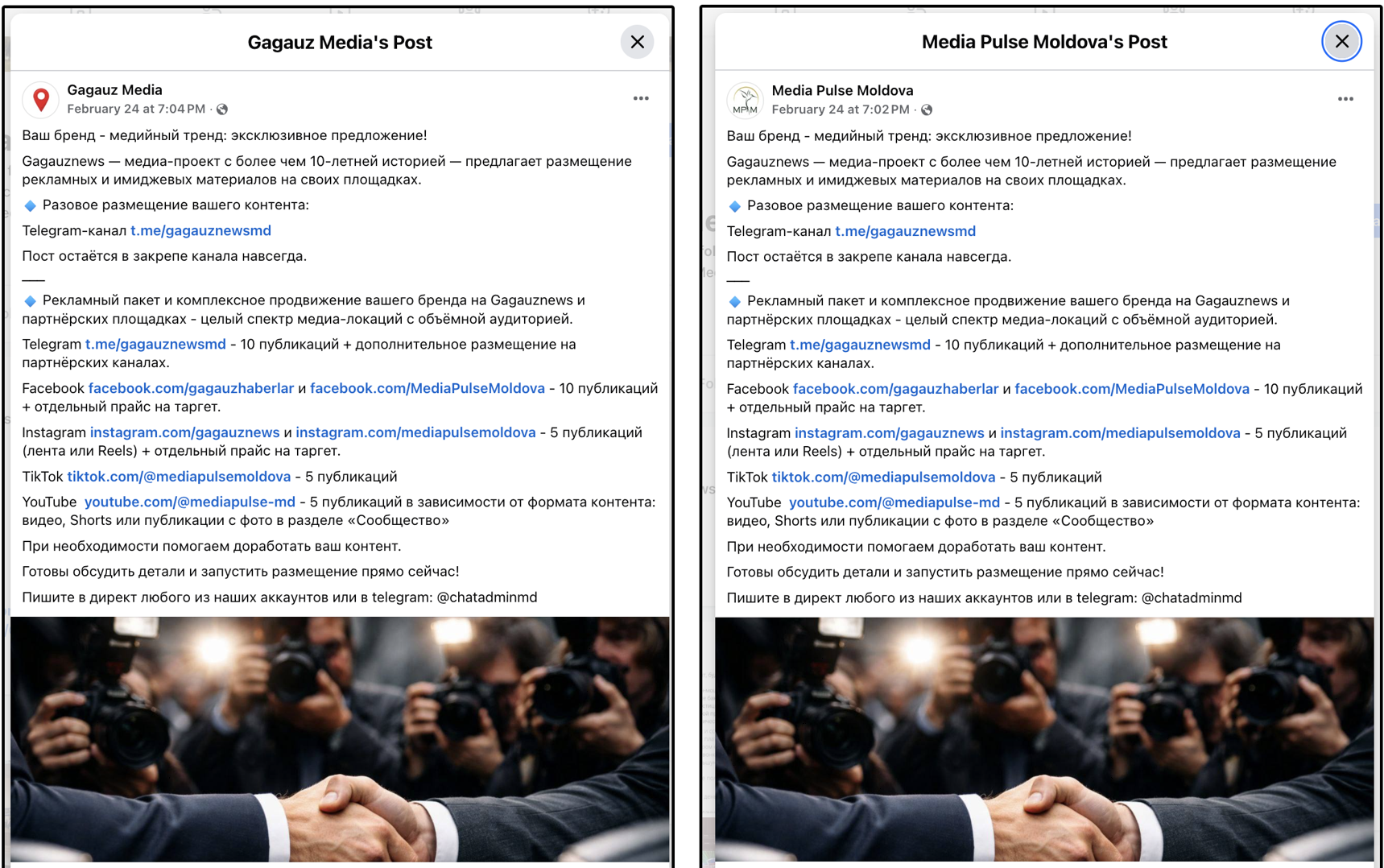
Banner: A collage comparing two Facebook posts of Gagauz Media (left) and Media Pulse Moldova (right), showing a cross-post linking to the other social media accounts of Gagauznews/Media Pulse Moldova. (Sources: Gagauz Media, Media Pulse Moldova)
A network of seven accounts affiliated with Gagauznews, a now-defunct news portal closed in 2022 by Moldova’s Security and Intelligence Service (SIS), has partially rebranded itself as Media Pulse Moldova. Our investigation shows Gagauznews assets partially rebranded in 2025 under the name “Media Pulse Moldova” on TikTok, Facebook, and YouTube, while also operating under the name “Gagauznews” on Telegram and Instagram. The network’s operators repost content from media sources that have been banned in Moldova since the 2022 invasion of Ukraine, including TASS, Izvestia, Rossiya 24, Smotrim, Primul in Moldova, RIA Novosti, and Moldova 24 (MD24, whose ties to Russian state media were previously exposed by the DFRLab). The network also promotes supporters of exiled oligarch Ilan Shor, including parties barred from running in the 2025 election over concerns of illegal foreign financing. This investigation examines how the network is actively serving an information laundering purpose, offering a platform to republish banned Russia-aligned media sources’ content and feature Shor-linked politicians and organizations.
According to Moldova’s Center for Strategic Communication and Countering Disinformation (CSCCD) 2025 report, Gagauznews represents “a pro-Russian and anti-European hub of information manipulation, which constantly produces and distributes fakes, deepfakes and denigrating articles, centered on sensitive narratives such as the involvement of the Republic of Moldova in the war in Ukraine, the persecution of Gagauzia and the destruction of traditional values by the European Union.”
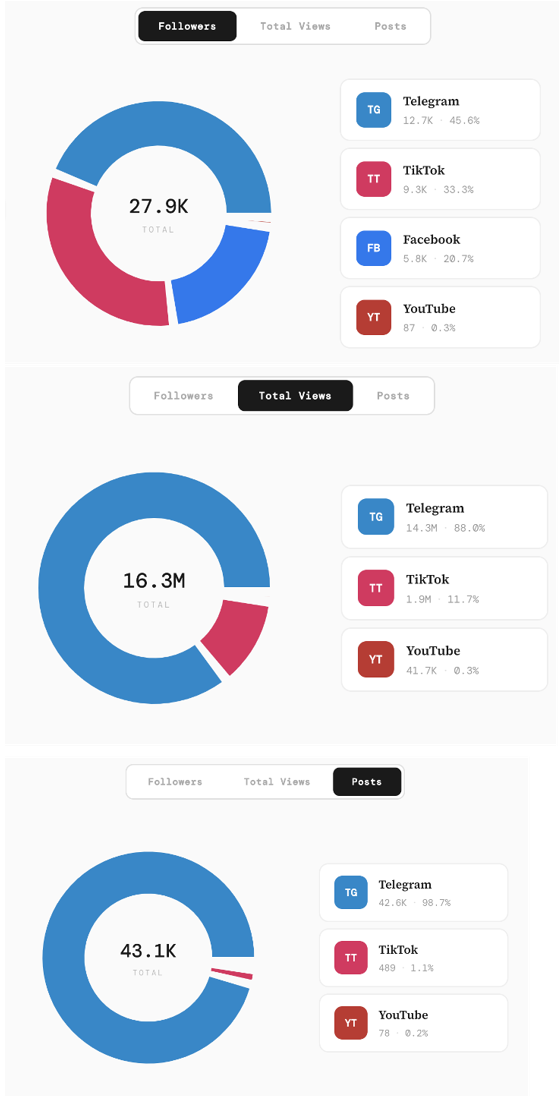
The network has amassed a total of approximately 28,000 followers, mostly on Telegram, TikTok, and Facebook. At the time of writing, it had garnered 16.3 million views, mostly split between Telegram, TikTok, and YouTube. Multiple indicators show that the Instagram, YouTube, Telegram, and TikTok social media assets engage in coordinated posting. Publicly available reporting on the organization’s continuous social media activity highlights that their previous social media assets on Facebook and YouTube engaged in the patterns documented in our analysis. This suggests that Gagauznews actively seeks to circumvent the ban against their news outlet by leveraging their social media presence.
In the lead-up to Moldova’s 2025 parliamentary elections, the network posted content alleging electoral fraud, targeting President Maia Sandu’s pro-EU Party of Action and Solidarity (PAS).
The analysis shows that multiple parties and politicians affiliated with Shor in Gagauzia are amplified by the network, sharing anti-EU messaging and providing a platform to parties that were barred from running in the 2025 parliamentary election. Our findings show that the network spread posts in support of the Victory Bloc, the Heart of Moldova, the Revival party (“Renastere” in Romanian), convicted former Governor of Gagauzia Evghenia Gutul, and her deputy, Mihail Vlah.
Gagauznews partially rebrands as Media Pulse Moldova
Following the Moldovan SIS ban, the Telegram channel @gagauznewsmd operated as the successor of the outlet’s banned website, though it existed prior to the ban, as can be seen on archived web pages from the outlet.
Following reporting from Alliance4Europe, Gagauznews assets were deplatformed by Meta and TikTok. Despite previous platform enforcement, Gagauznews still regenerated on social media with new accounts to distribute its content.
A Facebook page and a YouTube channel titled “Media Pulse Moldova” emerged in November and December 2025, reposting content from the Telegram channel @gagauznewsmd and video content from banned sources. On TikTok, a channel created in 2022 was renamed “Media Pulse Moldova” in August 2025. Although its previous name was not archived, the timing demonstrates that rebranding was already in motion prior to the emergence of the Facebook and YouTube accounts.
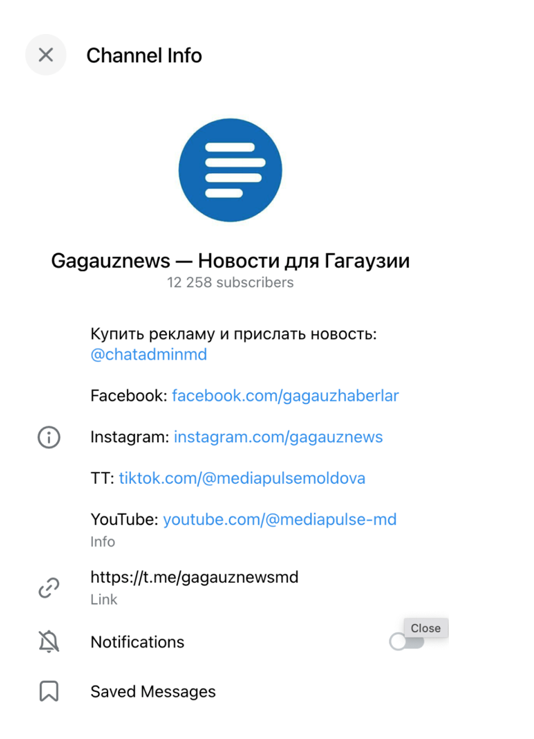
Another Facebook page titled “Gagauz Media” surfaced one year earlier in November 2024 with links to Gagauznews YouTube, TikTok, Telegram, and Instagram accounts in its bio, and exhibited similar posting behavior. All these assets are linked in @gagauznewsmd’s Telegram bio.
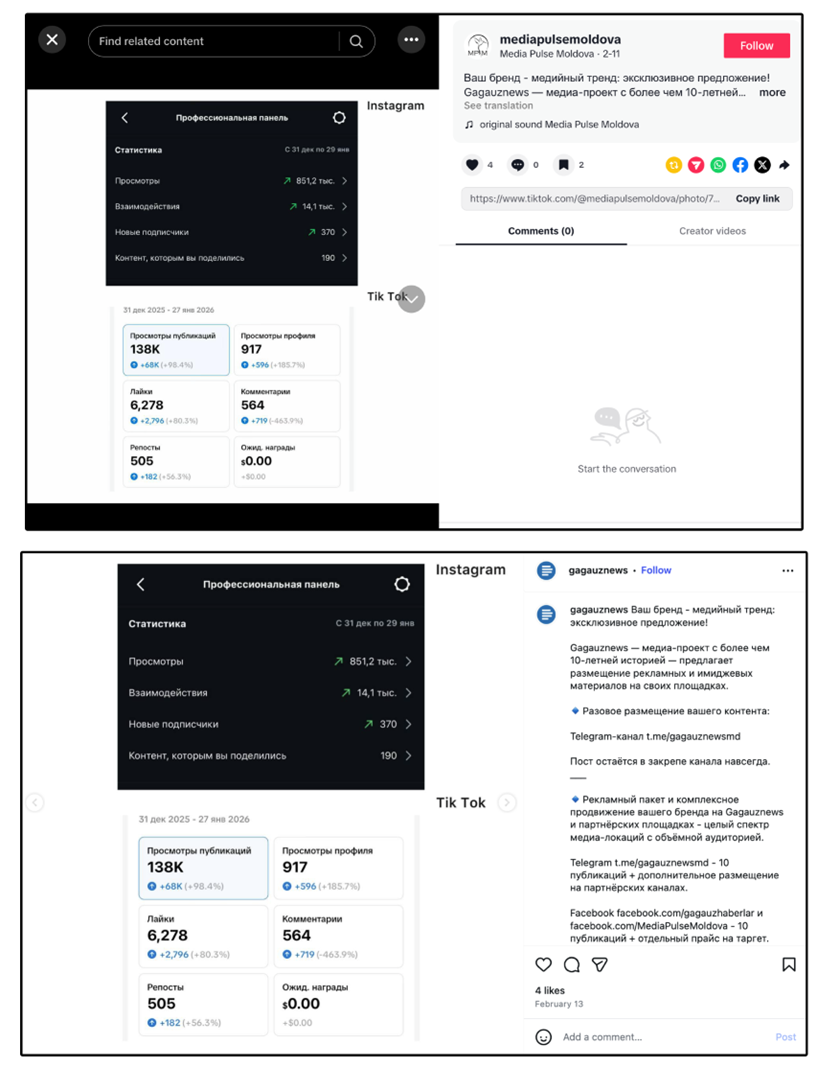
A January 2026 TikTok post comparing private account metrics (@gagauznewsmd’s Telegram channel against Media Pulse Moldova’s Facebook page, and Media Pulse Moldova’s Facebook page against the @gagauznews Instagram account) effectively confirms the connection between the Gagauznews and Media Pulse Moldova brands.
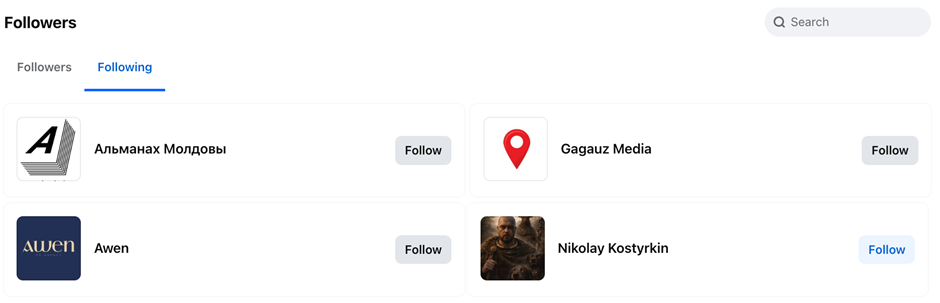
The Facebook page Media Pulse Moldova page follows Gagauznews editor-in-chief Nikolay Kostyrkin and the Facebook page “Gagauz Media,” reinforcing the links.
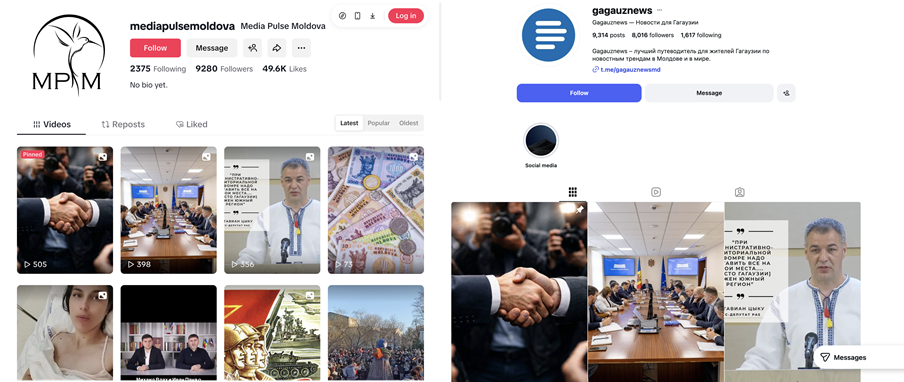
On Instagram, YouTube, and TikTok, Gagauznews and Media Pulse Moldova display nearly identical posting feeds, further verifying their shared ownership.
The Community Anti-Crisis Center
According to the Global Media Registry (GMR)’s Media Ownership Monitor, Gagauznews is managed by the Community Anti-Crisis Center, a public association founded in 2020 and headed by the Moldovan politician Victor Petrov, who was sanctioned by the European Union in 2024 for engaging in “efforts to destabilize the Republic of Moldova” following the outbreak of the Russia-Ukraine war. In 2025, Petrov became the vice president of the Executive Committee of Gagauzia, supporting Gutul, the then-head of the Gagauzia Autonomous Territory, who was sentenced in August 2025 to seven years in jail after being convicted of complicity in the illegal funding of the Șor party. Governor Gutul, who served as secretary of the Șor party until 2022, was convicted for reportedly “directing Russian financing” and “coordinating party activities and paying protesters.”
Previous investigations have raised suspicions regarding the benefit of the Center to Petrov. A 2024 report by Moldova’s Center for Anti-Corruption Journalistic Investigations highlighted that the Center was founded a year before the local Gagauz elections in 2021, during which Petrov was elected in Comrat, the capital of Gagauzia, with 97.5 percent of the votes. According to a June 2025 report by Moldovan news outlet IPN, quoting an investigation by Romanian investigative news outlet CuSens, “the beneficiaries of the organization were urged to vote for Victor Petrov.” Petrov publicly denied any involvement with the Center, despite evidence to the contrary.
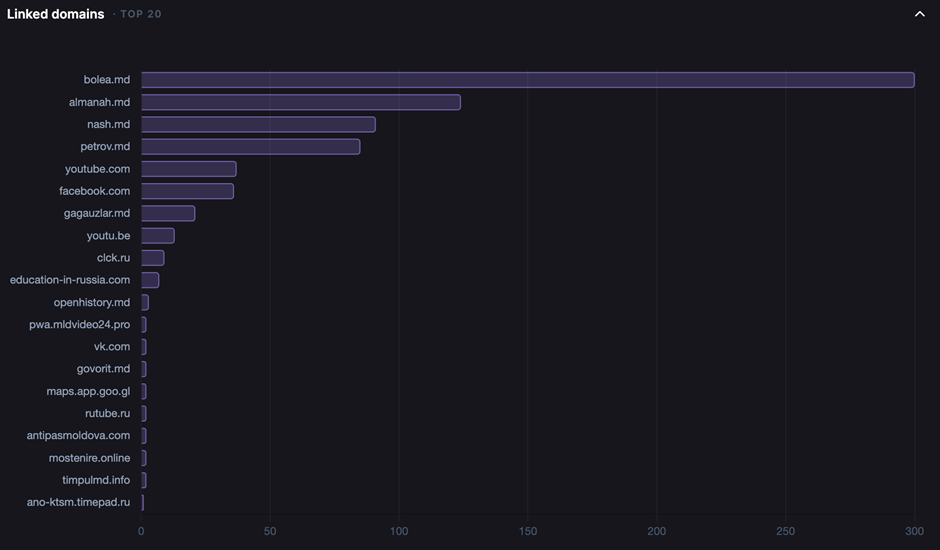
Although Petrov attempted to distance himself from the center, an analysis of the posts of the social media accounts linked to Gagauznews showed posts linking to nash.md, the Community Anti-Crisis Center’s website, ninety-one times. Petrov’s personal website petrov.md was mentioned in eighty-five posts.
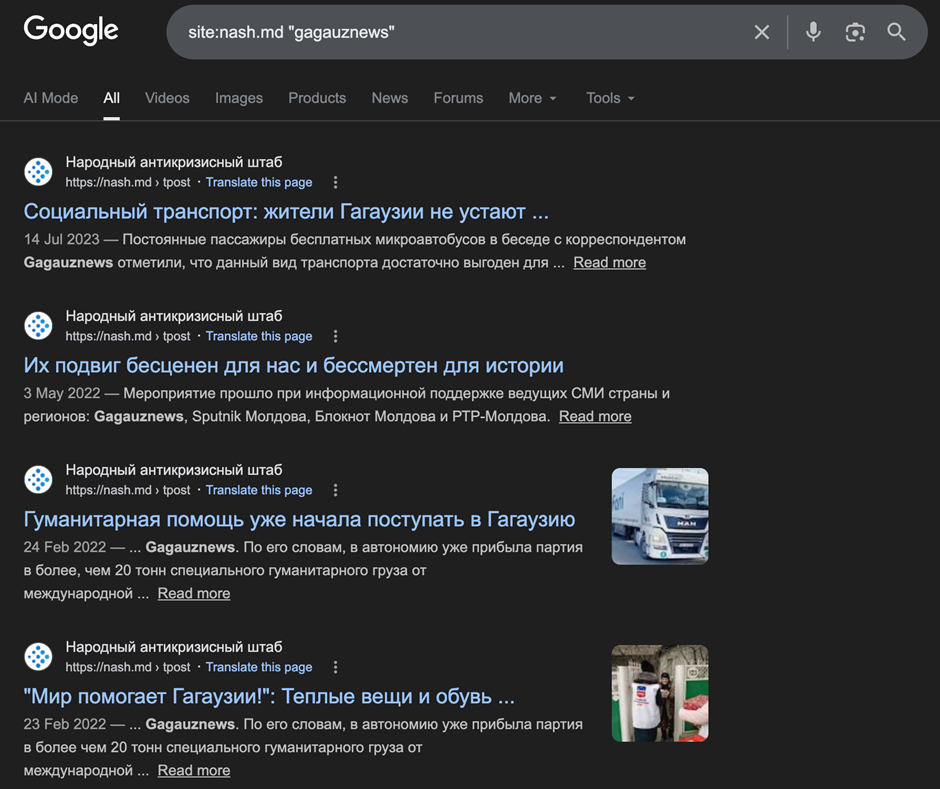
Further, using Google Dorks, we queried mentions of Gagauznews on the center’s website, revealing that the Community Anti-Crisis Center’s web page nash.md quoted Gagauznews even after its official closing in February 2022, underscoring the connection between the Center and the news outlet.
Support for banned parties during the 2025 parliamentary elections
The posting history of the social media accounts shows that they echoed pro-Russian political messaging from Ilan Shor and affiliated political figures in the lead-up and during Moldova’s 2025 parliamentary elections. The politicians amplified by the network have known links to pro-Kremlin organizations and political figures, to the extent that some represent political parties banned in Moldova for participating in illicit pro-Russia activities.
The accounts shared pro-Russian messaging aligned with the parties of the Victory bloc, the Revival Party, the Heart of Moldova, and amplified pro-Russian Gagauz politicians affiliated with Shor that are now under sanctions in the EU, such as Mihail Vlah, former Governor Gutul’s deputy.
The most frequently shared links across all platforms pointed to the personal website of Vasile Bolea, a politician affiliated with the Revival party, whose website bolea[.]md was mentioned in three hundred posts. The party’s leader, Natalia Parasca, has been subjected to sanctions in the EU, Ukraine, Canada, and Switzerland due to her party’s affiliation with Shor. Meanwhile, Petrov himself publicly acknowledges that he is affiliated with the Revival party.
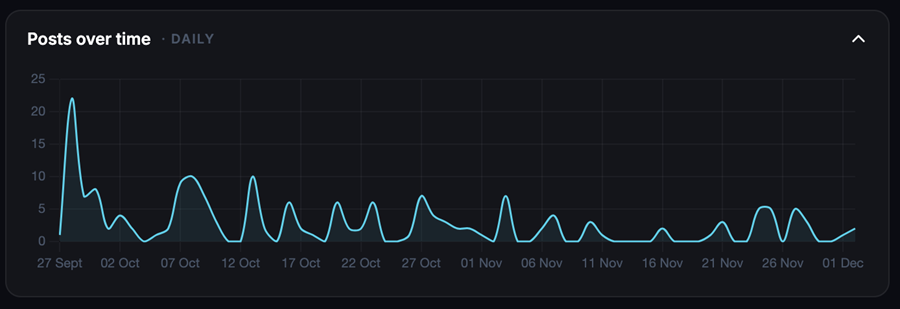
Media Pulse Moldova’s first recorded TikTok post emerged on election day, September 27, in support of Gutul.
The TikTok post’s description shows it was reposted from the Telegram channel of the sanctioned TV channel Primul in Moldova, @primulinmd. Subsequent TikTok posts expressed support for pro-Russian parties part of the Electoral Bloc Party coalition, two of which the Central Electoral Commission banned from running in the 2025 parliamentary elections over alleged illegal financing.
Further, the posting history of the TikTok account shows that it supported Shor and affiliated political figures in the lead-up and during the country’s 2025 parliamentary elections. Twenty TikTok posts were published with the hashtag #elections (#выборы in Russian) between September 27 and September 29. During that time frame, Media Pulse Moldova made five posts amplifying allegations of electoral fraud against the ruling party, PAS, and featuring interview segments from sanctioned Russian media RIA Novosti. Likewise, on Telegram, Gagauznews posted 173 posts alleging electoral fraud since 2024, thirty-four of which were posted on September 25, two days before the parliamentary elections.
In addition, Media Pulse Moldova’s first recorded Facebook post, which appeared in July 2025, featured Reghina Apostolova, a longtime associate of Shor. In 2018, Apostolova, who was running for the Șor party during that year’s parliamentary elections, was reportedly excluded from the race after a court established that she “financed her own campaign using foreign financial sources.” Apostolova was detained in 2019 by the National Anti-Corruption Center due to her connection with Shor in the “theft of the century” affair, in which she is suspected of being connected to one of the banks involved in a fraud case amounting to 13.7 billion lei (around $785 million USD).
Amplifying sanctioned Russian entities
Media Pulse Moldova shared a YouTube video promoting Russia-linked NGO Rossotrudnichestvo, a state-sponsored organization banned in the EU over organizing pro-Russia rallies in the wake of the 2022 full-scale invasion. This underscores how Gagauznews furthered messaging aligned with Russia’s political agenda, platforming another controversial Russian influence entity.
Media Pulse Moldova’s first YouTube video, posted on December 11, 2025, was a promotional video for Russian House in Chisinau, the informal name of the Russian Center for Science and Culture. It is an autonomous Russian federal agency operating abroad and is linked to Russia’s Ministry of Foreign Affairs through the program Rossotrudnichestvo.
Rossotrudnichestvo is a Russian foundation also known as the Foundation for the Support and Protection of the Rights of Compatriots Living Abroad. The organization was placed under EU, Australian, UK, Ukrainian, and Swiss sanctions in 2022 over suspicions of organizing pro-Russian rallies in the wake of the war. It serves as a front to pursue Russia’s foreign policy objectives, and most notably, organizing influence operations in Africa. In 2024, Le Monde and other news outlets found that Rossotrudnichestvo backed Pravfond, an organization running the disinformation portal Euromore.eu and other online influence operations globally.
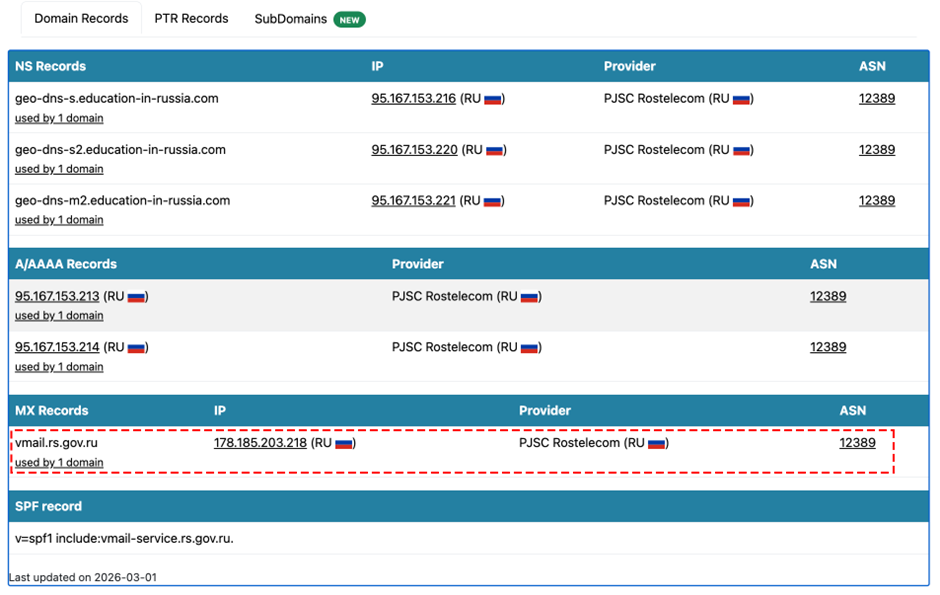
On November 5, 2025, the Moldovan government declared the Cultural Center to be “a center under the cover of which activities were carried out to undermine the sovereignty of the Republic of Moldova.” Media Pulse Moldova’s video promoting the Russia House was posted one month after the government announced that the Cultural Center would reportedly be closing by July 4, 2026. The video further advertised the website education-in-russia[.]com, a Russian government-owned website, promoting access to prestigious Russian higher education. This domain’s MX server records, which are used to issue emails, link it to Russia’s Rossotrudnichestvo’s domain rs.gov[.]ru, further exposing this Media Pulse Moldova post as amplifying the agency’s reach among the Gagauz audience.
The DFRLab collected more than 43,000 Gagauznews social media posts and found coordination across accounts on Telegram, Instagram, TikTok, and Facebook. These also contained dozens of instances where video excerpts were reposted from banned Russian news sources, including TASS, RIA Novosti, Rossiya 24, Izvestia, Smotrim, and Primul in Moldova. The accounts also reposted content from Moldova 24 (MD24), a Moldova-based online TV station that the DFRLab found is affiliated with Russian state organizations.
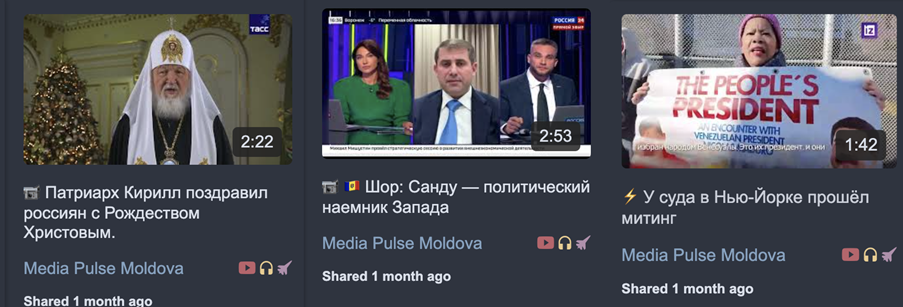
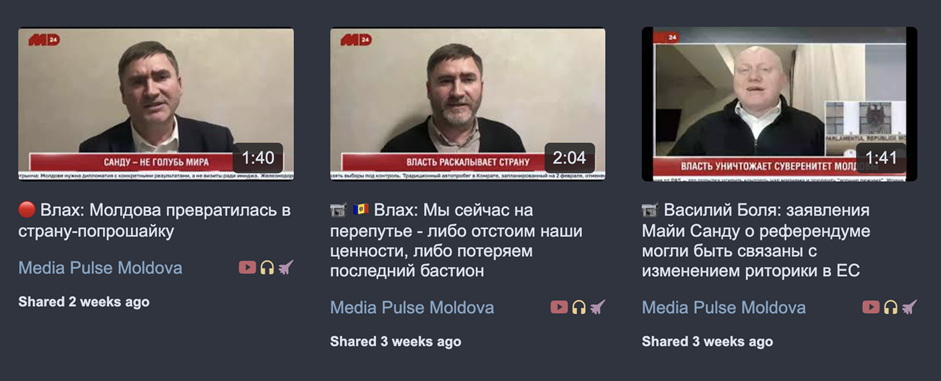
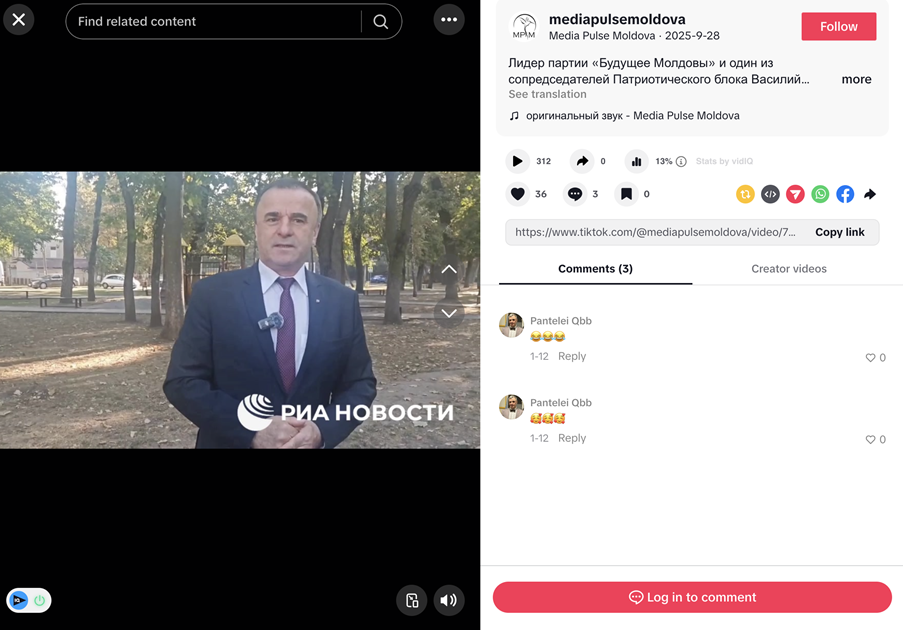
On TikTok, the DFRLab found instances in which the network advertised the banned parties Future of Moldova and Heart of Moldova, using segments from Russian sources banned in Moldova. In one instance, the network posted a segment from the sanctioned outlet RIA Novosti’s Telegram channel, including its watermark, featuring Future of Moldova party leader and former prime minister Vasile Tarlev. In the clip, he claimed Moldovan authorities had blocked Russian and Commonwealth of Independent States (CIS) election observers, calling it a sign that “a massive fraud was being planned.” Tarlev headed the Revival party in 2014, which, due to its connection with Shor, could not register in the 2025 parliamentary election.
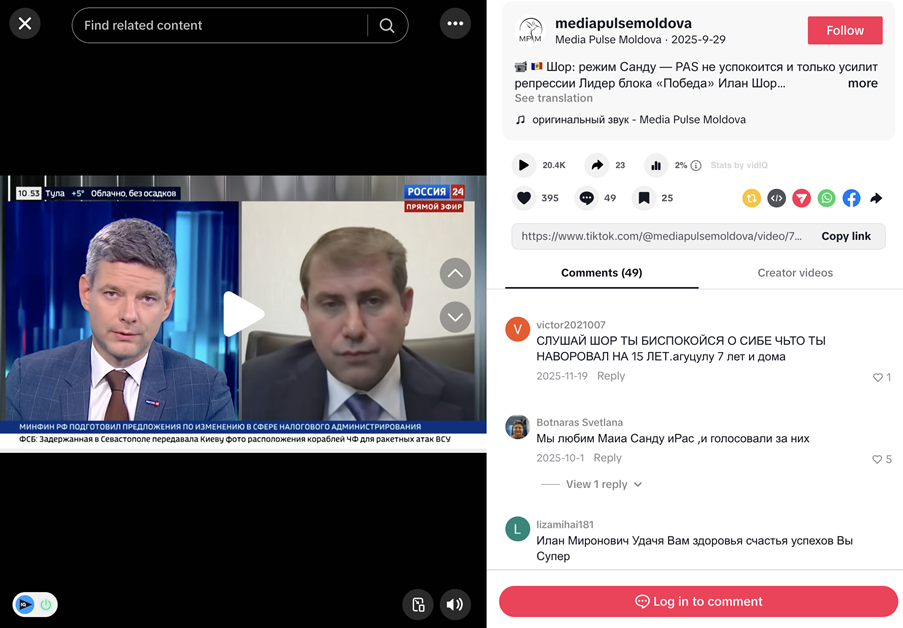
A September 29 TikTok post containing a segment from sanctioned Russian TV station Russia 24 featured Shor accusing the PAS party of “not calming down and only intensifying repression.”
Conclusion
The findings of DFRLab’s investigation collectively support the conclusion that Media Pulse Moldova is a rebranded successor to the previously banned media network Gagauznews. The rebranded network is significant because it was able to adapt its operations in response to platform enforcement, and it was also able to sustain the level of reach of sanctioned Russian media through this rebranding as well as by actively engaging across numerous social media platforms–including Telegram, TikTok, Facebook, and YouTube. This allowed for the efforts of pro-Kremlin political actors to be amplified and served to introduce coordinated pro-Kremlin narratives into Moldova’s information environment at a time when such activities were most likely to have an impact. The extent, timing, and cross-platform nature of Gagauznews and Media Pulse Moldova’s coordinated activities demonstrate continued vulnerabilities in Moldova’s online information environment and the persistence of Russian efforts to undermine Moldovan sovereignty despite government efforts to sanction pro-Russia content and networks.
Cite this case study:
Valentin Châtelet, “Gagauznews rebrands to launder sanctioned content into Moldova,” Digital Forensic Research Lab (DFRLab), March 31, 2026, https://dfrlab.org/2026/03/31/gagauznews-rebrands-to-launder-sanctioned-content-into-moldova/.