Inauthentic networks fuel Poland’s border vigilante movement
AI-generated content and inauthentic activity distort Poland’s immigration debate
Inauthentic networks fuel Poland’s border vigilante movement
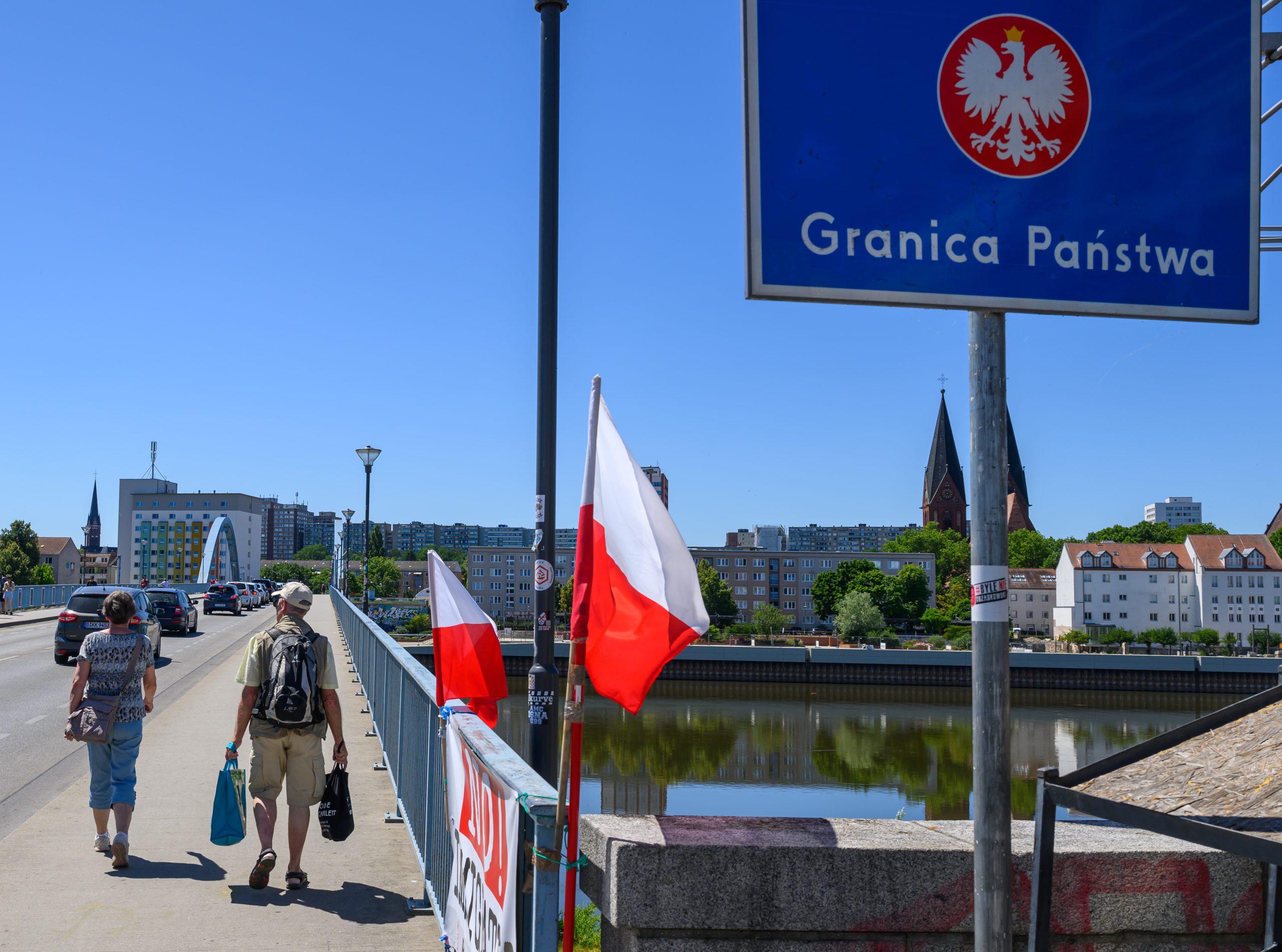
BANNER: Passers-by cross the German-Polish border crossing in July 2025. (Source: Patrick Pleul/dpa via Reuters Connect)
Citizen patrols along Poland’s border with Germany triggered a surge in online anti-migration rhetoric, driven by inauthentic accounts and coordinated networks, and boosted by political figures and far-right networks. Inauthentic pages, AI-generated media, and copy-paste narratives were used to legitimize vigilante activity and frame the Polish government as weak. This investigation shows how digital platforms were used to spread fear, legitimize vigilantism, and distort Poland’s immigration debate.
In Summer and Autumn 2025, the Border Defense Movement, led by right-wing activist Robert Bakiewicz, organized “citizen patrols” along the Polish-German border. The patrols claimed they were tracking illegal border crossings, alerting Polish authorities, and opposing the return of migrants to Poland by German border guards. These citizen patrol groups described themselves as a “grassroots social initiative” defending Poland from illegal immigration.
The activities of these citizen patrols—such as stopping vehicles or detaining migrants on the border—raised legal concerns. In response to the increased presence of citizen patrols along the border, Polish Prime Minister Donald Tusk emphasized that border security is the state’s responsibility, not that of “far-right activists.” He warned that impersonating or obstructing official services would lead to fines or detention. Amnesty International also called for urgent action, stressing that private individuals cannot perform tasks like ID checks or vehicle searches, which are strictly limited to authorized officials under Polish law. Members of the citizen patrol claimed they were filling a gap left by government inaction. The Polish government said the actions of the citizen patrols inflamed tensions in the region. On July 7, Poland temporarily reinstated border controls with Germany and Lithuania, which were recently extended to April 2026.
Citizen patrols increased their activity along the Polish-German border in the summer of 2025, citing rising illegal migration. Germany can return migrants to Poland through three procedures: under the Dublin Agreement (for asylum seekers first registered in Poland), through readmission (for migrants who entered Germany via Poland), and through immediate refusals of entry. The first two require notifying Polish authorities; the third does not. Between January-June 2025, Germany returned 314 migrants under the first two procedures—down from 688 in 2024 and 968 in 2023. In 2024, 9,369 people—the majority being Ukrainians—were turned away on the spot.
In order to analyze online discussions surrounding the citizen border patrols, the DFRLab collected fifteen keywords and hashtags linked to citizen patrols and the anti-migration movement, and analyzed their mentions on Facebook, YouTube, and TikTok between June 1 and September 15, 2025. The DFRLab collected over 370,000 posts, comments, and video transcripts.
AI-generated images promote anti-migrant sentiments
On June 12, a Polish woman was fatally attacked by a foreign national in Toruń’s Park Glazja, sparking public outrage. In the aftermath, self-declared citizen patrols began appearing in Toruń.
Tensions worsened after a deadly fight in Nowe involving Colombian nationals, leading to further anti-migrant sentiment and the targeting of refugees. Following this incident, citizen patrols also appeared in Nowe.
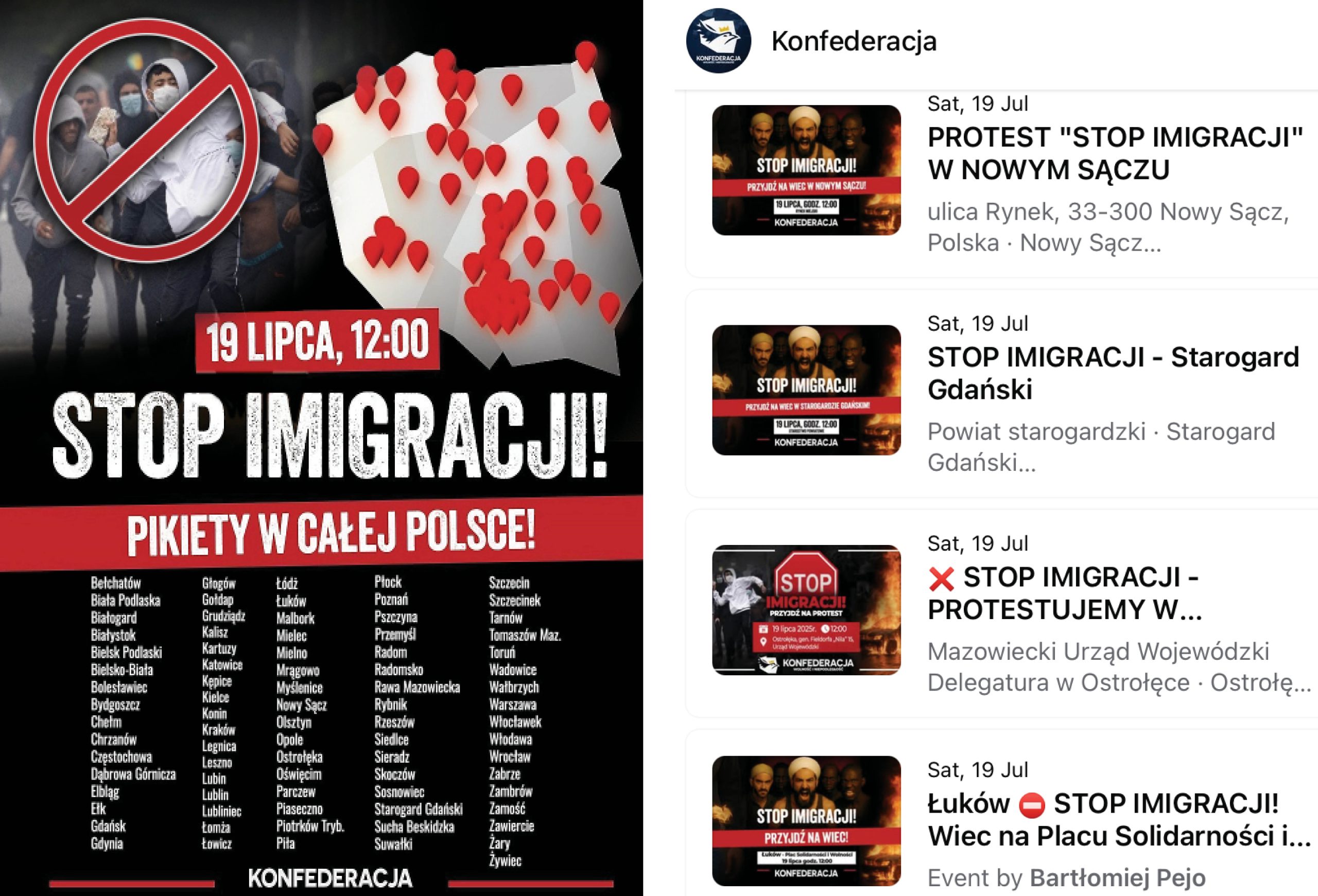
In response to these events, the right-wing Confederation Party launched nationwide protests, blaming migration and government failures for the violence, and sharing banners that portrayed foreigners as a threat. On July 19, protests organized by the Confederation Party were held in over seventy cities, with 110 events in total.
The leader of the Confederation Party, Krzysztof Bosak, posted an image promoting an anti-migration rally that showed young people in masks in an apparent attempt to portray them as aggressors. The photo visible on Bosak’s banner is an old and reused image that was taken in June 2023 during protests in France.
The July 19 anti-migration demonstrations were organized using Facebook events planned by the Confederation Facebook page. Most of these events contained AI-generated banners depicting a burning car, a person with a Molotov cocktail, and men of color with aggressive facial expressions. Even though Facebook provides some transparency for events, including a history of name changes, it does not label AI-generated or synthetic images in event banners or posts. As a result, users were exposed to emotionally charged, AI-generated visuals that encouraged participation in the offline activities.
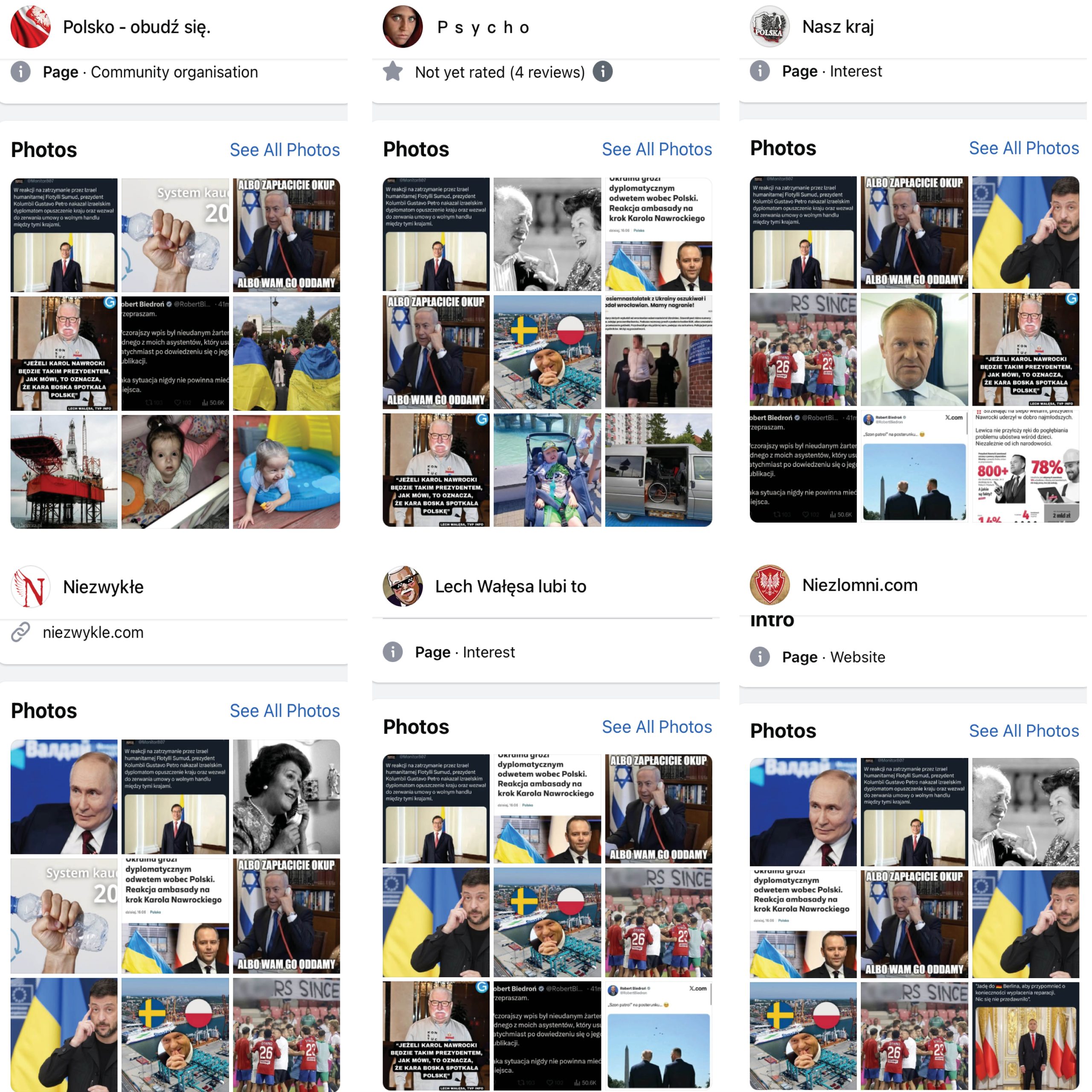
The DFRLab identified a network of at least seven right-wing, anti-migration Facebook pages that shared a video with identical captions (here, here, here, here, here, here, and here). In the video, a woman is seen tearing down Confederation banners. The person filming confronts her, accuses her of vandalism, and claims she is breaking Polish law by destroying someone else’s property. The caption mockingly frames this act as an example of “democracy, tolerance, freedom of speech, and views.” The DFRLab further analyzed content from these seven pages and found they post nearly identical material in short intervals. While the timestamps differ slightly—suggesting the posts aren’t cross-posted automatically—the overwhelming similarity in content suggests the pages may operate as a network.
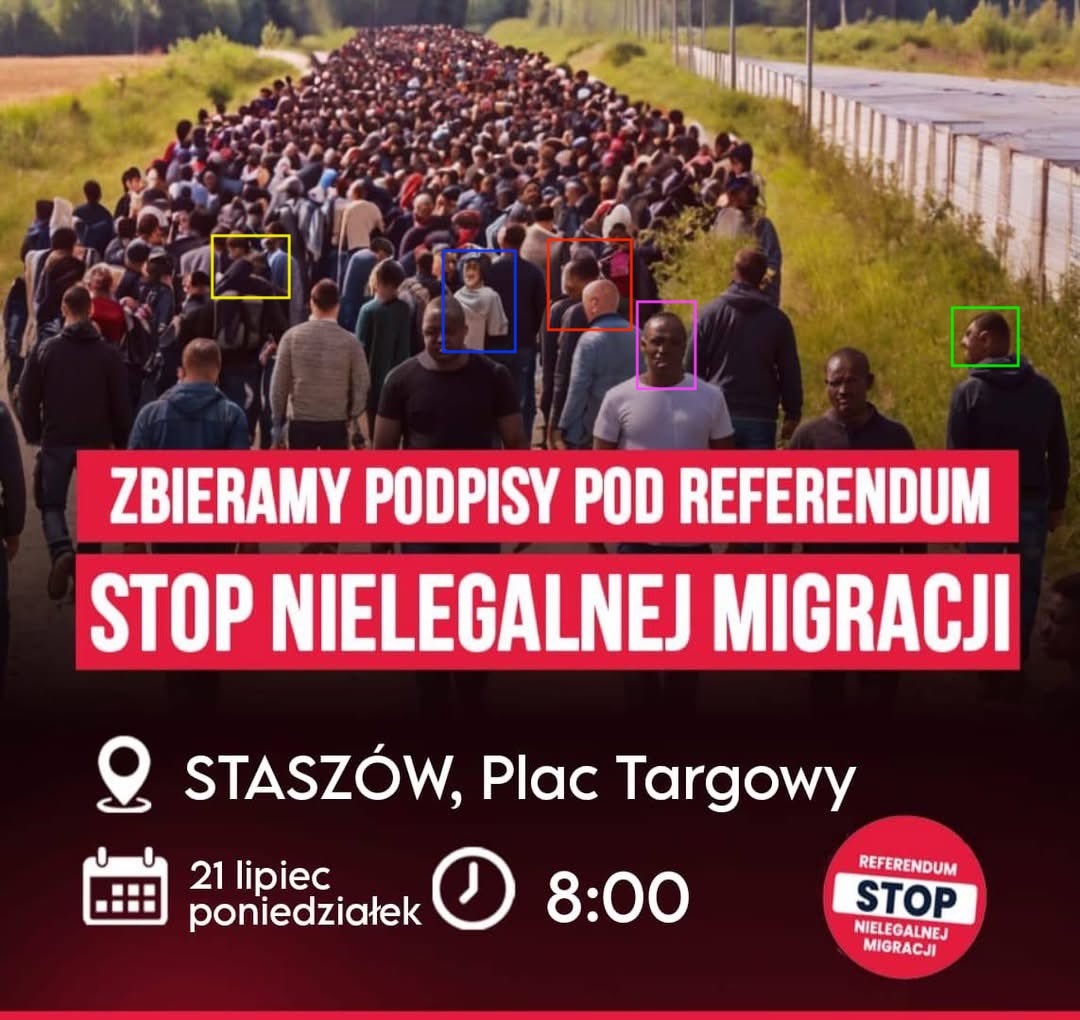
In July 2025, Poland’s Law and Justice Party (Prawo i Sprawiedliwość, PiS) began collecting signatures to hold a nationwide referendum on “illegal immigration.” At least three PiS Parliament members (Anna Krupka, Patryk Wicher, and Michał Woś) shared an AI-generated referendum campaign banner on Facebook of “migrants.” The photo (see below) showed a large crowd crossing a border, seemingly designed to stoke fear and mobilize support for the petition. Visual analysis revealed clear signs of AI manipulation, including missing body parts, such as the head (yellow), hand (blue), ear (pink), and face (red), along with distorted facial features (green).
Targeting Polish Border Guards
Polish border officials have also been targeted by online threats and insults related to their handling of security and migration. On June 29, Robert Bąkiewicz, leader of the Border Defense Movement, posted a photo of a female officer, accusing her of letting in migrants “on the recommendation of the German side,” and called for her identification. In a video posted the same day, he addressed border and military officers: “You know you are committing a crime,” and said that “they would be [held] accountable for their actions.”
In August 2025, the District Prosecutor’s Office in Gorzów Wielkopolski charged Bąkiewicz with insulting border officers and military police by publicly calling them “traitors.” He was placed under police supervision and banned from coming within one kilometer of German border crossings. In a separate case, on February 9, 2026, prosecutors charged him with inciting hatred based on national and ethnic differences against people of German nationality and immigrants.
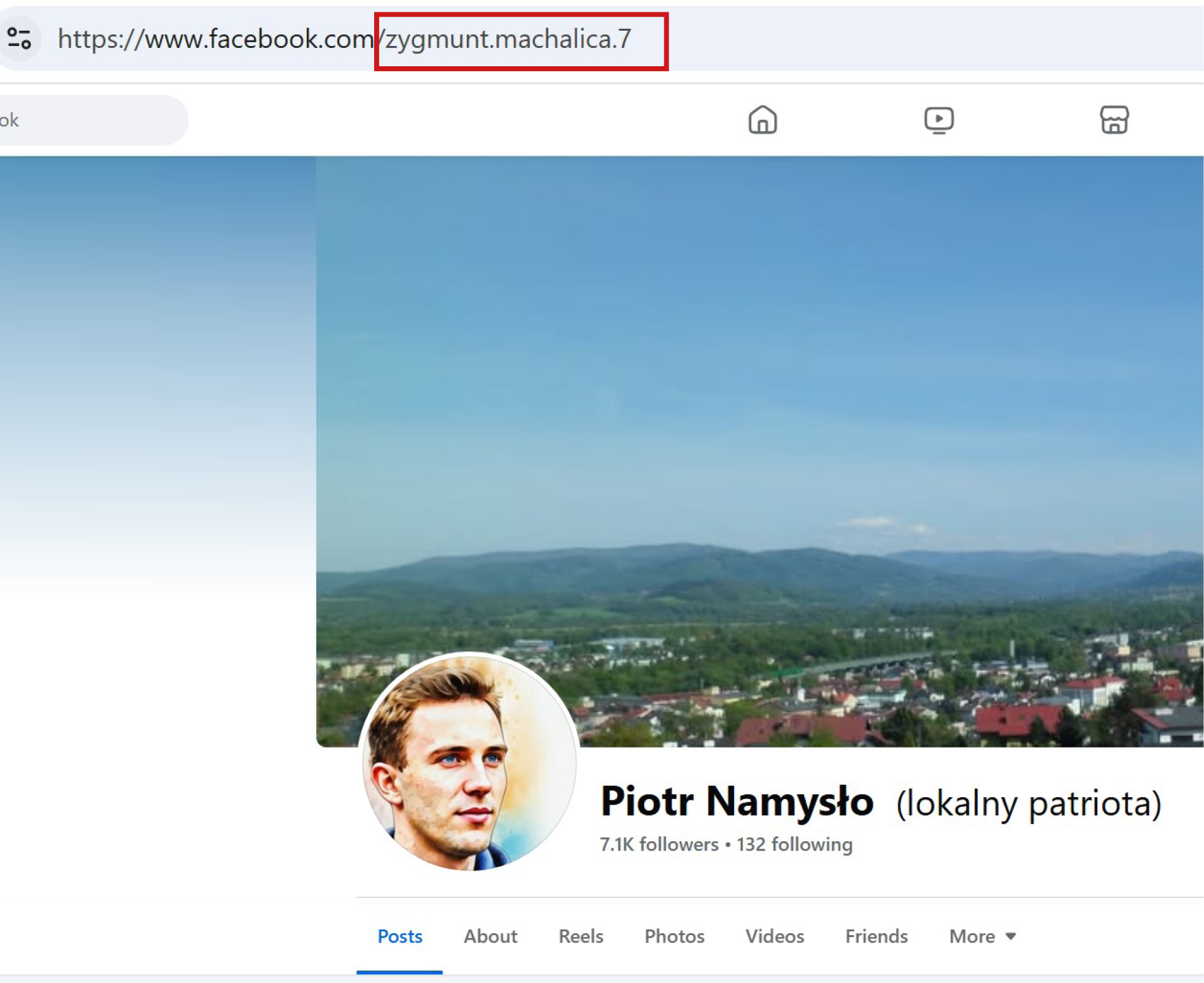
On June 29, the Facebook account Piotr Namysło also published the same photo of the female border guard with identical text, his post was shared 266 times as of September 15, 2025. The account also operated an X profile under the same name, which has since been removed. Namysło’s profile photo appears to be either AI-generated or AI-filtered. The About section of Namysło’s Facebook account states that he works as a journalist, however, the DFRLab could not find information about him online to verify this. There is an explicit discrepancy between the account name (Piotr Namysło) and the name in the account URL, which shows “zygmunt.machalica.7,” a Polish male name. Such inconsistency is a common indicator of inauthentic Facebook accounts.
Patrioci Facebook group
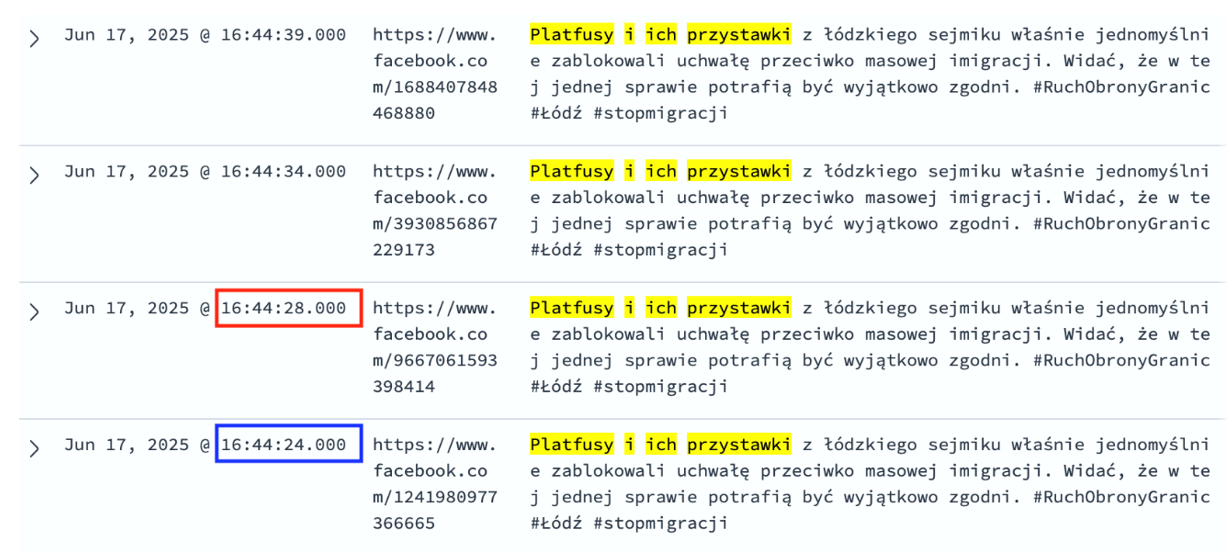
Bąkiewicz’s post about the identification of a female Polish Border Guard was shared 256 times from the PATRIOCI Facebook group as of September 15, 2025. The group had 17,800 members at the time of writing, and is frequently used by Polish politicians to disseminate nationalist content. While Bąkiewicz regularly posts in the group, most of his other posts received fewer than ten shares, indicating the post’s abnormal virality. PATRIOCI appears to be a primary amplification node for the administrators of Bąkiewicz’s Facebook page. In one case, the DFRLab found that a post from Bąkiewicz’s page was shared by the PATRIOCI group on its page four seconds after the post went live. Additionally, the Facebook pages of Law and Justice MPs Piotr Uściński and Łukasz Mejza frequently post in the same group.
The group PATRIOCI demonstrates signs of inauthenticity. It was created by Alternews, which ceased posting in May 2019. Prior to going dormant, it regularly reposted content from Russian state-controlled outlet RT alongside various Polish websites and disseminated false information.
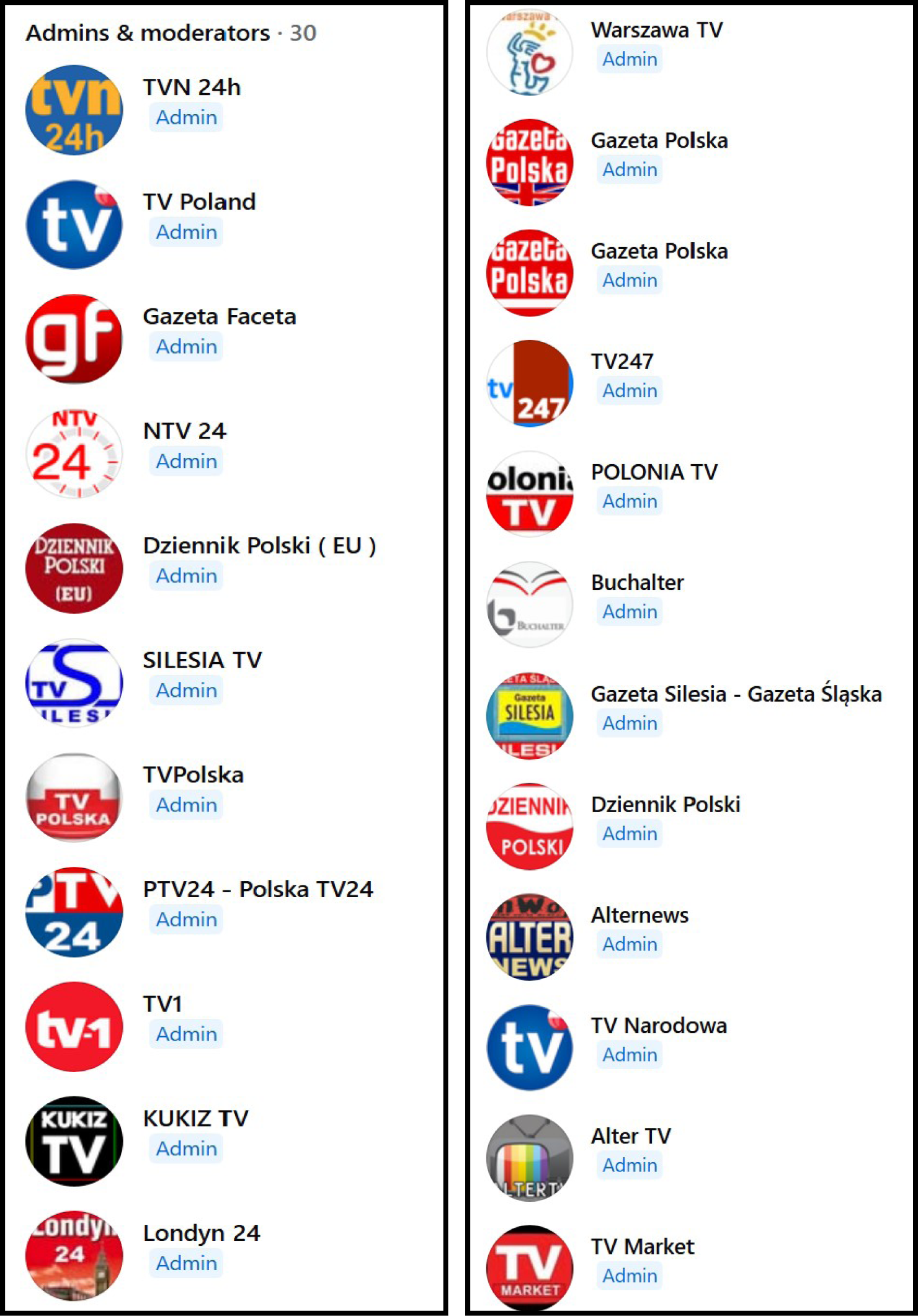
The PATRIOCI Facebook group is managed by twenty-eight administrators and two moderators. Of these thirty admin accounts, twenty-two either impersonate legitimate Polish media outlets or present themselves as news organizations. Each lists a website in their “About” section—typically the page name followed by a domain extension. Most use .pl domains, with one .eu domain (DziennikPolski.eu) and two .uk domains (GazetaPolska.uk, londyn24.uk). These websites are either inactive or their domains are currently for sale. The majority of these admin pages also operate another Facebook group called POLACY (archived).
One of the moderators, who is active and posts in the group, is Polish right-wing journalist and vlogger Krzysztof Woźniak, who, in the past, was affiliated with the political party KORWiN, led by Janusz Korwin-Mikke.
Taken together, these tactics point to a likely coordinated inauthentic network on Facebook targeting Polish citizens. While the technical coordination in posting times is visible via metadata, the platform’s lack of transparency regarding page ownership and historical admin data prevents researchers from definitively identifying the central entity managing this network.
Online-offline activity
In the dataset, online spikes in activity were often correlated with offline actions. The most popular post saw a spike in mentions on June 29-30, driven by heightened citizen patrol activity along the border and the death of a Polish woman, who was attacked by a foreign national in early June. Another peak on July 19 was linked to the nationwide protests against migration organized by the Confederation Party.
Another spike in online activity occurred on August 26 after reports of a Polish soldier being injured while stopping a Poland-Belarus border crossing by migrants. Facebook posts by two politicians from the Law and Justice Party, Bartosz Kownacki and Sebastian Kaleta, amplified the incident without context to spread anti-migration rhetoric. The DFRLab observed that most of the comments in the dataset that day that advocated for violence, calling for the shooting of migrants, appeared under these two posts. Polish authorities later clarified that the soldier’s injury was not caused by migrants, but by a stun grenade exploding in the soldier’s hands. This shows how political amplification of unverified reports can quickly distort public perception and escalate violent rhetoric.
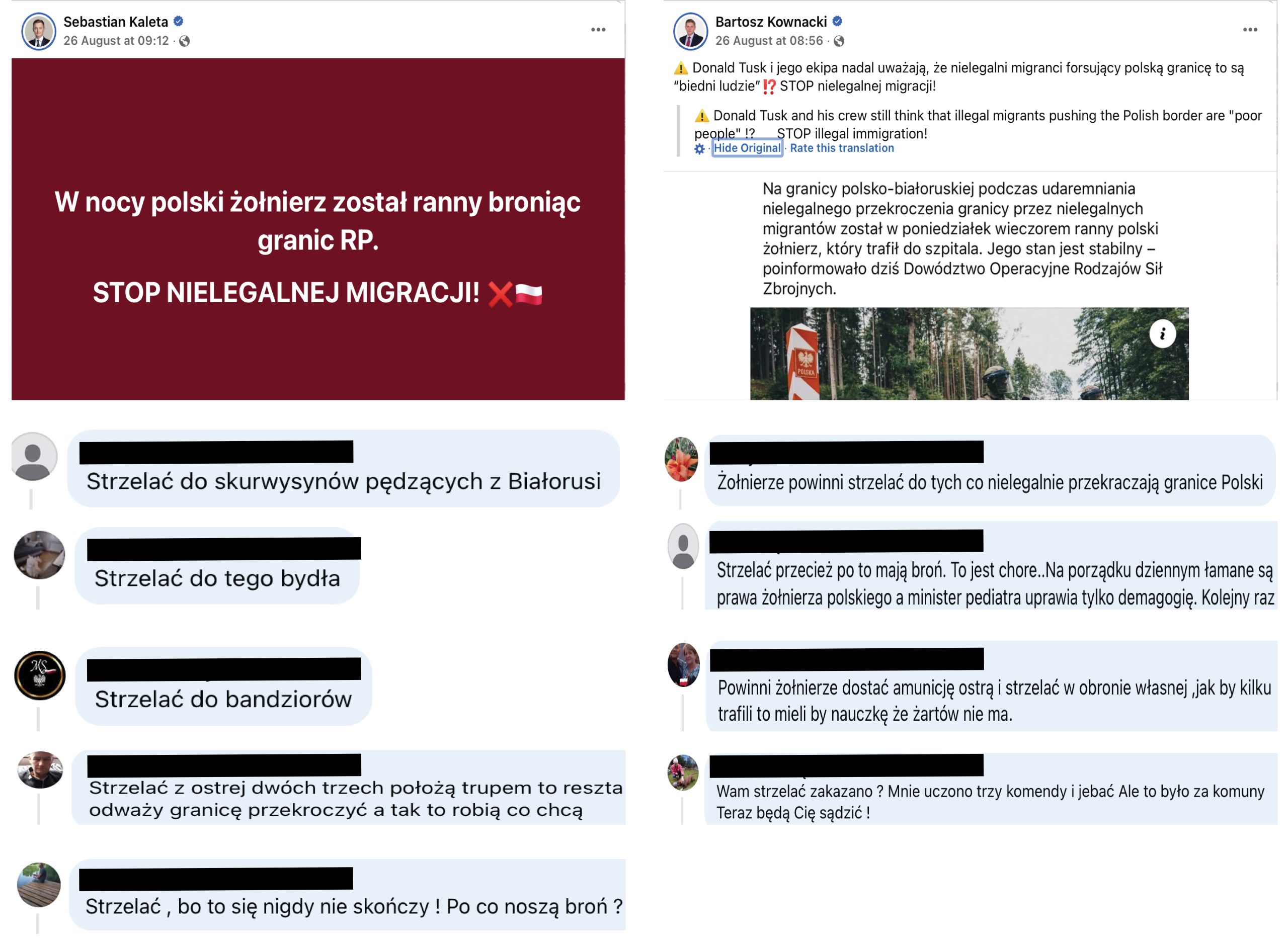
Throughout the dataset, social media users publicly advocated for the use of lethal force against migrants. The DFRLab identified that between June 1 and September 15, over 100 posts and comments from the dataset contained the keywords “shoot” or “kill” and over 250 posts and 430 comments described the situation on the border as an “invasion.” Examples of this rhetoric include explicit demands to shoot migrants like “cockroaches” or “like ducks.” Comments on social media suggested that border guards and soldiers should not hesitate to shoot migrants without warning. Others claimed that unless migrants are shot on the border, they will continue crossing the border illegally. Tomasz Buczek, a member of the European Parliament from the Confederation Party, argued that soldiers have the right to shoot at migrants to defend the borders.
Such violent and hostile language was not limited to migrants, it also extended to authorities. Several posts and comments in the dataset also called for shooting German police officers, accusing them of illegally “smuggling” migrants into Poland and referring to them as “Goebbels,” a reference to Joseph Goebbels.
The DFRLab also identified over 200 comments on Facebook, TikTok, and YouTube labeling Polish border guards as “traitors,” “collaborationists,” or “sell-outs.” The most popular of these posts in the dataset came from Maciej Małecki, a member of the Polish Sejm (parliament) from the Law and Justice Party.
Facebook amplification
The DFRLab identified a coordinated inauthentic network of fifteen Facebook pages amplifying anti-migration content from several media outlets, but primarily Tygodnik Solidarność (Tysol.pl). Tygodnik Solidarność was launched in 1981 and is an official publication of Solidarność (Solidarity), a Polish trade union founded in 1980 under the leadership of Lech Wałęsa.
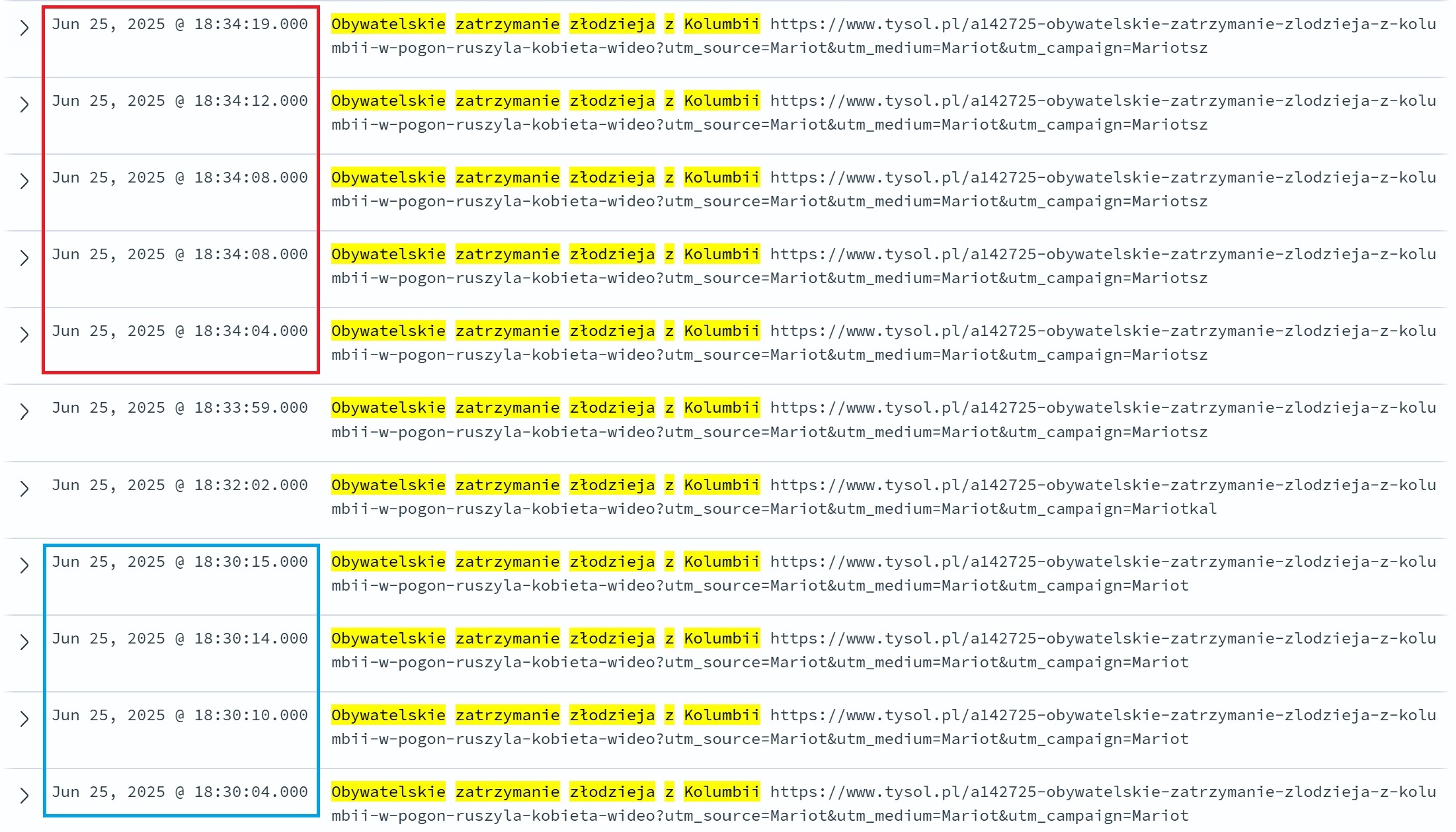
On July 5, Facebook pages cross-posted an article from Tysol.pl that claimed Poles are defending the German border by conducting citizen arrests of migrants and alerting the border authorities. These Facebook pages also published an identical post in Polish titled “Civil arrest of a thief from Colombia.” Each post included a video screenshot and a link to the tysol.pl article titled “Citizens arrest Colombian thief. Woman chases him [VIDEO].” All fifteen Facebook pages posted the article within four minutes of each other, with several published within the same minute, indicating possible coordination between the pages. For instance, four pages (here, here, here, and here) posted at 18:30 CET, while nine pages (here, here, here, here, here, here, here, here, and here) posted identical content at 18:34.
There are multiple cases in which political and anti-migration posts from Tysol.pl’s Facebook page was posted in unison by the apparent network, appearing within seconds across the pages. For instance, a June 22 post on the Tysol.pl Facebook page with the caption “Germans are massively sending migrants to Poland” appeared almost simultaneously across six associated pages (here, here, here, here, here, and here).
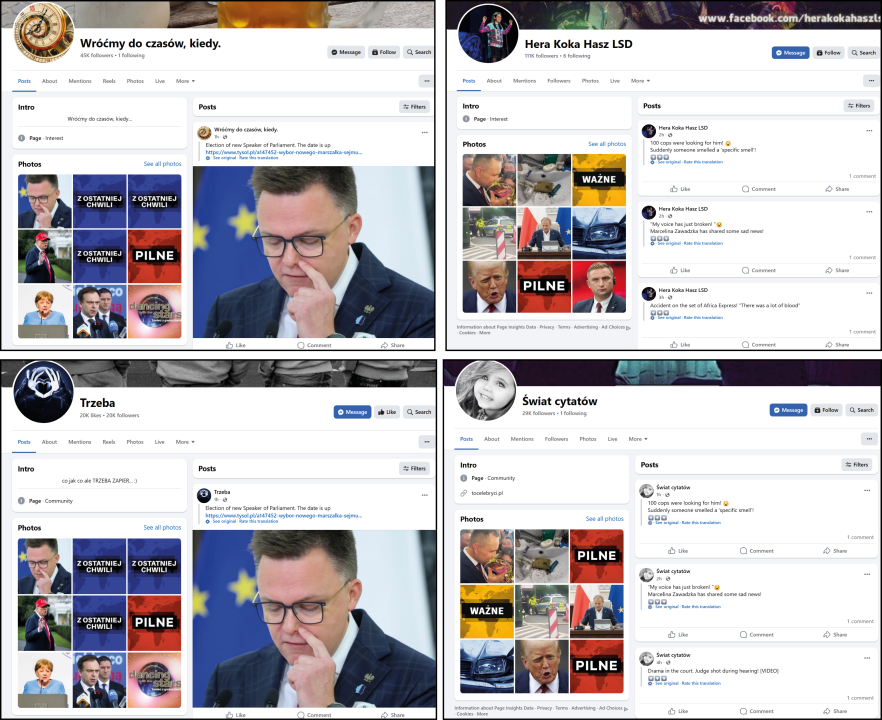
The page names are general or nationalistic, such as “Everything for Poland,” “I Love Poland,” “God Honor Homeland,” or “World of Quotes,” “No to Islamization of Europe,” and “Solid Lawyer.” This is a common tactic used by inauthentic networks on Facebook to attract broader audiences. Another indicator of inauthenticity is the mismatch between their large follower counts and the extremely low or close to zero engagement under their posts. The most followed page, I love Poland, has over 150,000 followers as of February 2026.
Conclusion
Coordinated online campaigns and AI-generated media are eroding public trust and inflaming tensions around the topic of migration. Far-right actors are using digital means of deception to legitimize vigilantism and portray the state as weak. These tactics don’t just distort the migration debate, they normalize hate, undermine democratic institutions, and blur the line between activism and extremism.
The DFRLab’s investigation shows that apparent grassroots outrage can be the product of carefully orchestrated digital manipulation. However, this investigation also exemplifies the ongoing deficiencies in the data that platforms provide to independent researchers. While publicly available metrics allow for the identification of surface-level coordination, a lack of access to transparency data—such as admin logs, account creation histories, and ad library granularities—prevents a complete mapping of the actors behind these campaigns.
Platforms’ opacity regarding inauthentic networks represents a systemic vulnerability. Without robust transparency mechanisms and better data access for researchers, malicious actors will continue to exploit these loopholes to spread polarizing messaging and undermine civil discourse with impunity.
Cite this case study:
Givi Gigitashvili, Sopo Gelava, “Inauthentic networks fuel Poland’s border vigilante movement,” Digital Forensic Research Lab (DFRLab), February 10, 2026, https://dfrlab.org/2026/02/10/far-right-networks-leverage-digital-platforms-to-fuel-polands-border-vigilante-movement/.