China-linked Spamouflage targets Tibetan parliament-in-exile elections
A China-linked Spamouflage network is targeting Tibetans with growing sophistication but limited reach.
China-linked Spamouflage targets Tibetan parliament-in-exile elections
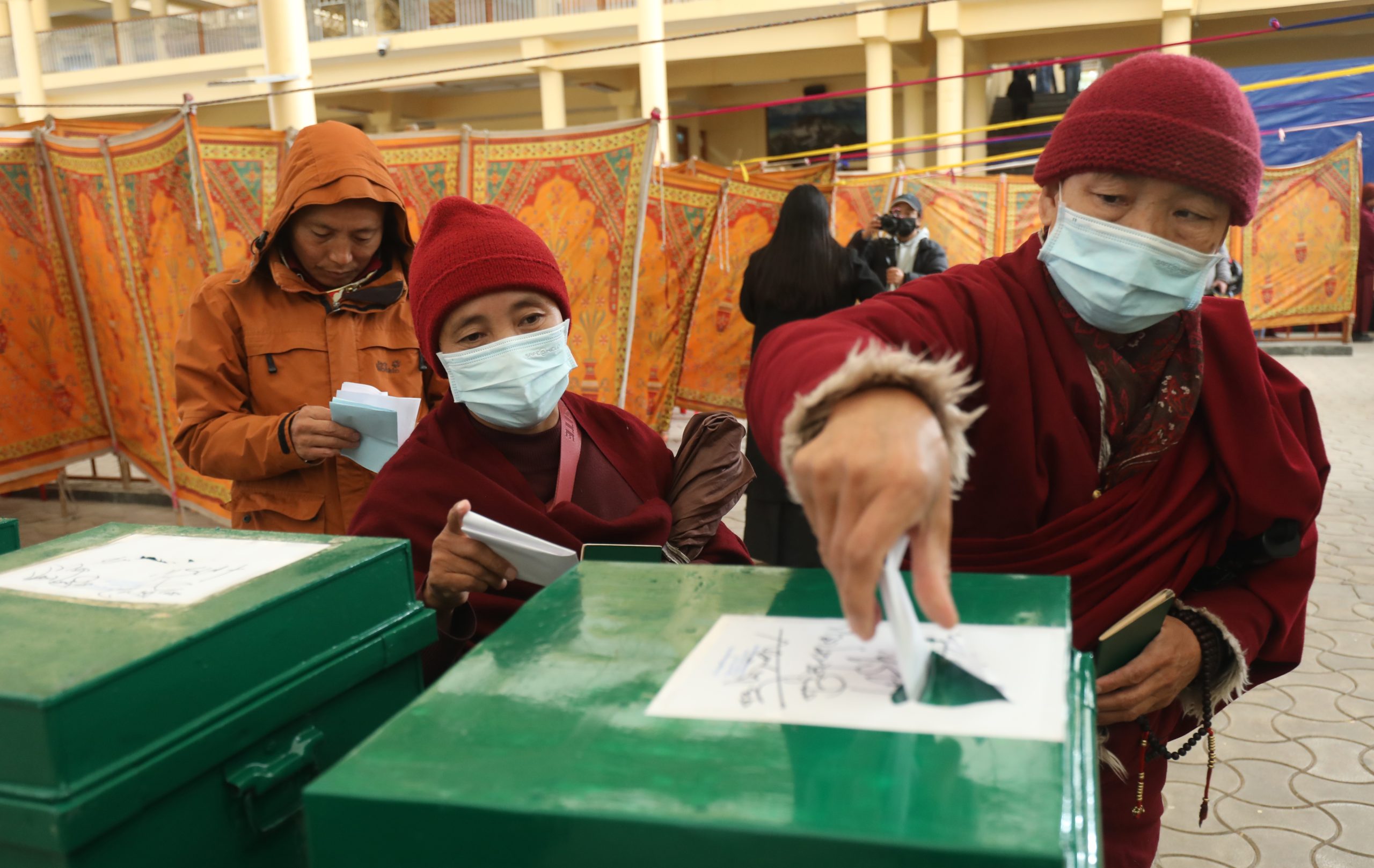
BANNER: Buddhist monks living in exile in India cast their votes for the Tibetan Parliament-in-Exile on February 01, 2026. Members of the Tibetan exile community around the world cast their votes to choose the Sikyong (political leader) and representatives to the 18th Tibetan Parliament-in-Exile during the preliminary phase of the two-stage election. Matrix Images/Sanjay Baid
A Chinese influence operation consisting of ninety Facebook profiles and thirteen Instagram profiles is targeting the April 26 elections for the Tibetan Parliament-in-Exile. The operation is connected to a larger network that posts narratives about the Philippines, the United States, Taiwan, and Japan.
The Tibetan government-in-exile, formally known as the Central Tibetan Administration (CTA), is headquartered in Dharamshala, India, which serves as the political home for Tibetans who fled Chinese rule after the Dalai Lama’s flight from Lhasa in 1959. It runs its own democratic elections: one for the political leader called the Sikyong, and one for parliament. On April 26, Tibetans will vote to fill the parliament’s 45 seats. The Sikyong election already concluded in February, when incumbent Penpa Tsering, a vocal critic of Beijing and advocate for Tibetan rights internationally, secured a second term.
Beijing has long sought to weaken the exile government’s standing. Graphika previously found that the China-linked influence operation Spamouflage used AI to augment its targeting of CTA elections, with coordinated accounts on Tumblr and X going after specific candidates. The DFRLab assesses with high confidence that the operation targeting the CTA elections is also operating on Meta platforms. The Foundation for Defense of Democracies also previously identified Chinese influence networks targeting the United States, Japan, and the Philippines on X and other platforms, sharing media assets and narratives with the Facebook network identified here.
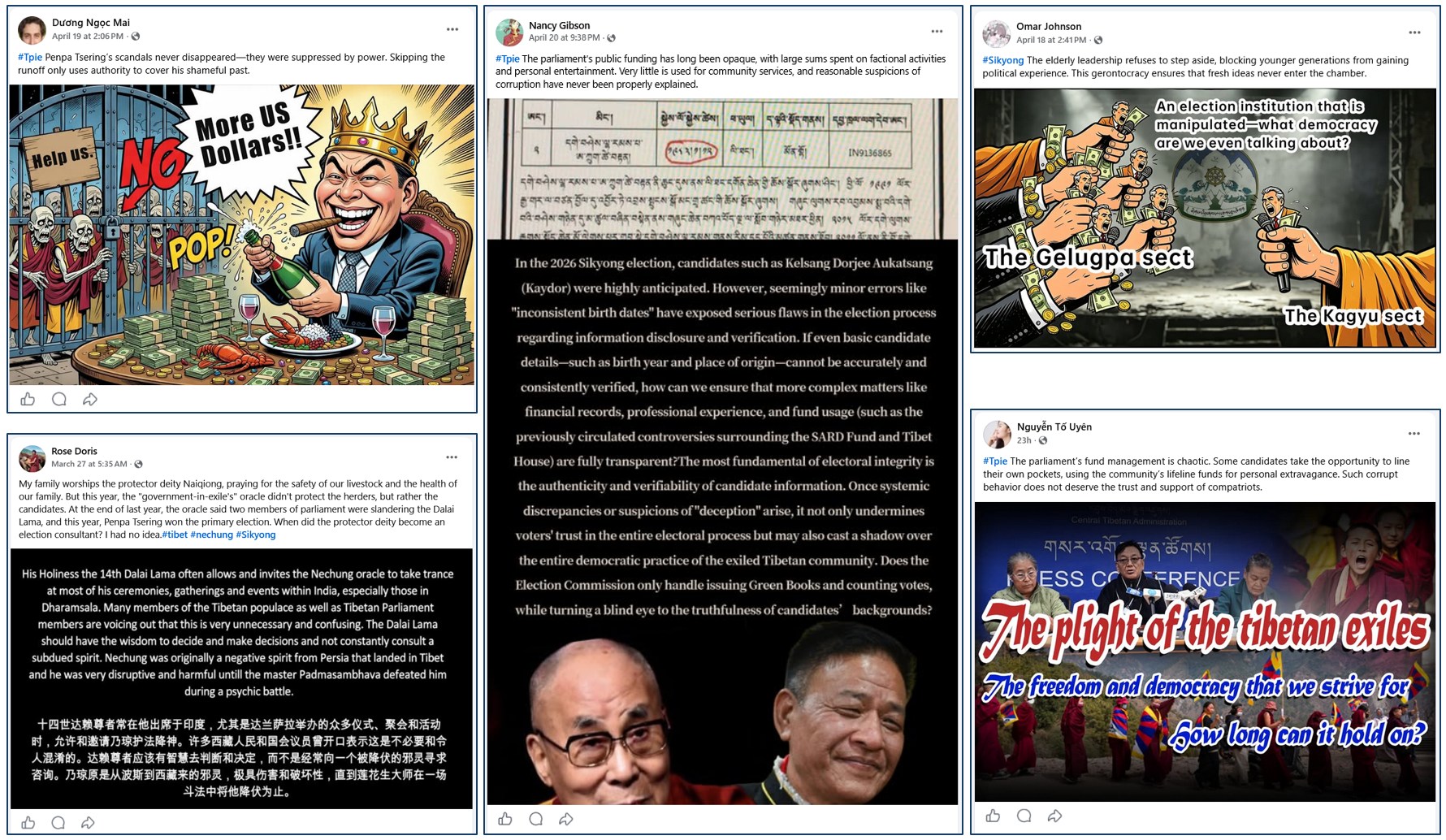
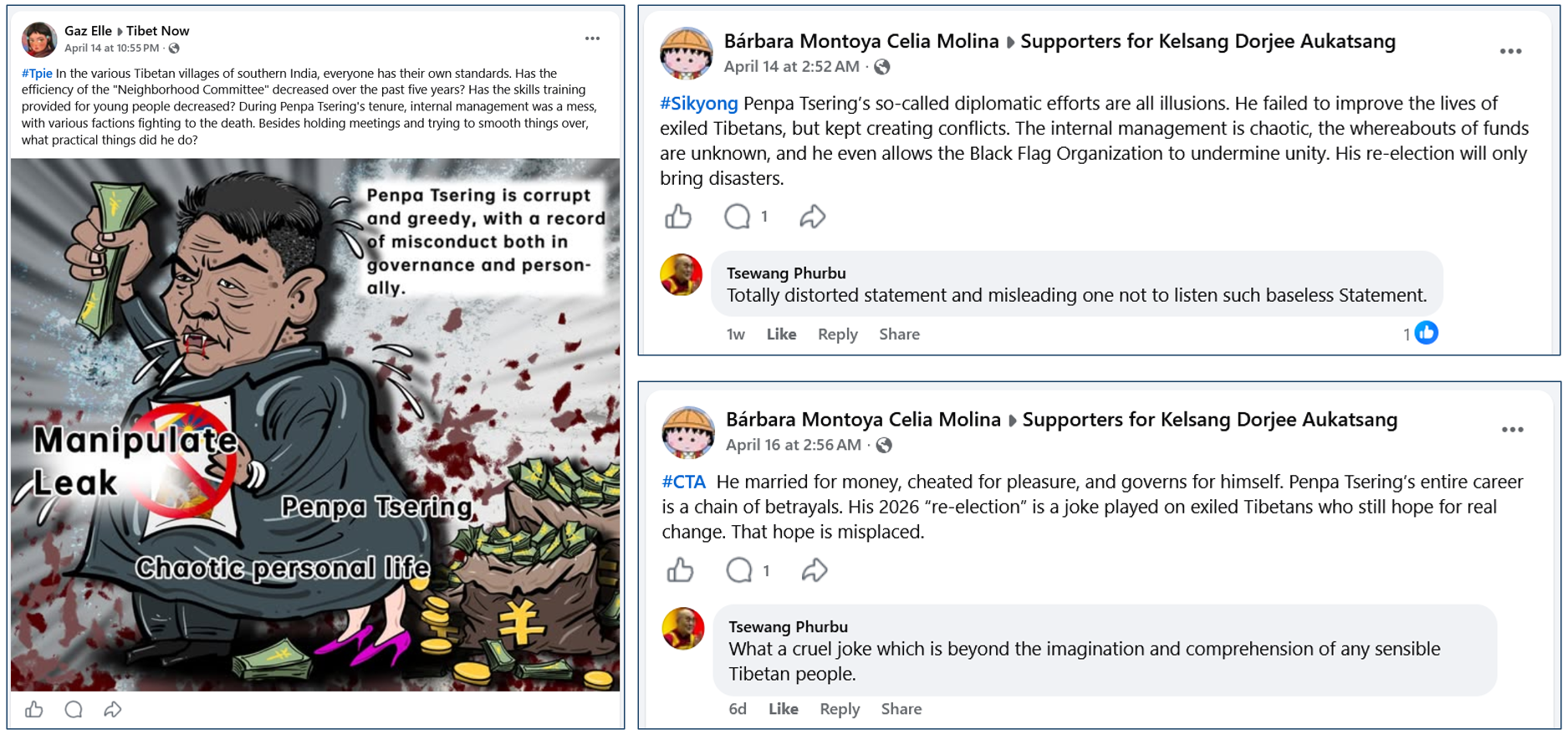
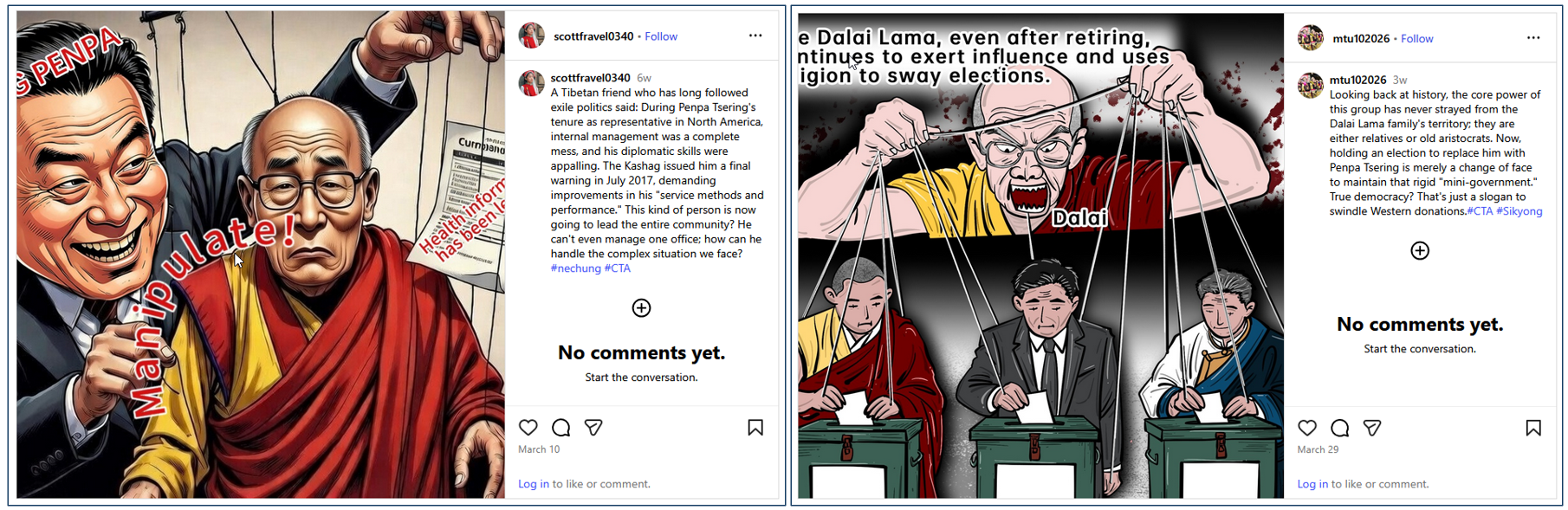
The Facebook Spamouflage network is pushing overlapping narratives. The most common is a personal attack on re-elected leader Penpa Tsering, portraying him as corrupt and power-hungry. Another narrative casts the election itself as manipulated, seizing on real internal controversies. Another attacks the exile government as dominated by monks and the Dalai Lama. The network tries to drive wedges within the community. The goal is to erode trust in the exile government, weaken its international voice, and raise doubts about whether it can credibly represent Tibetans without the Dalai Lama. However, virtually none of these posts seem to have attracted any organic engagement, possibly because all the identified assets are regular Facebook profiles with limited reach and not established pages.
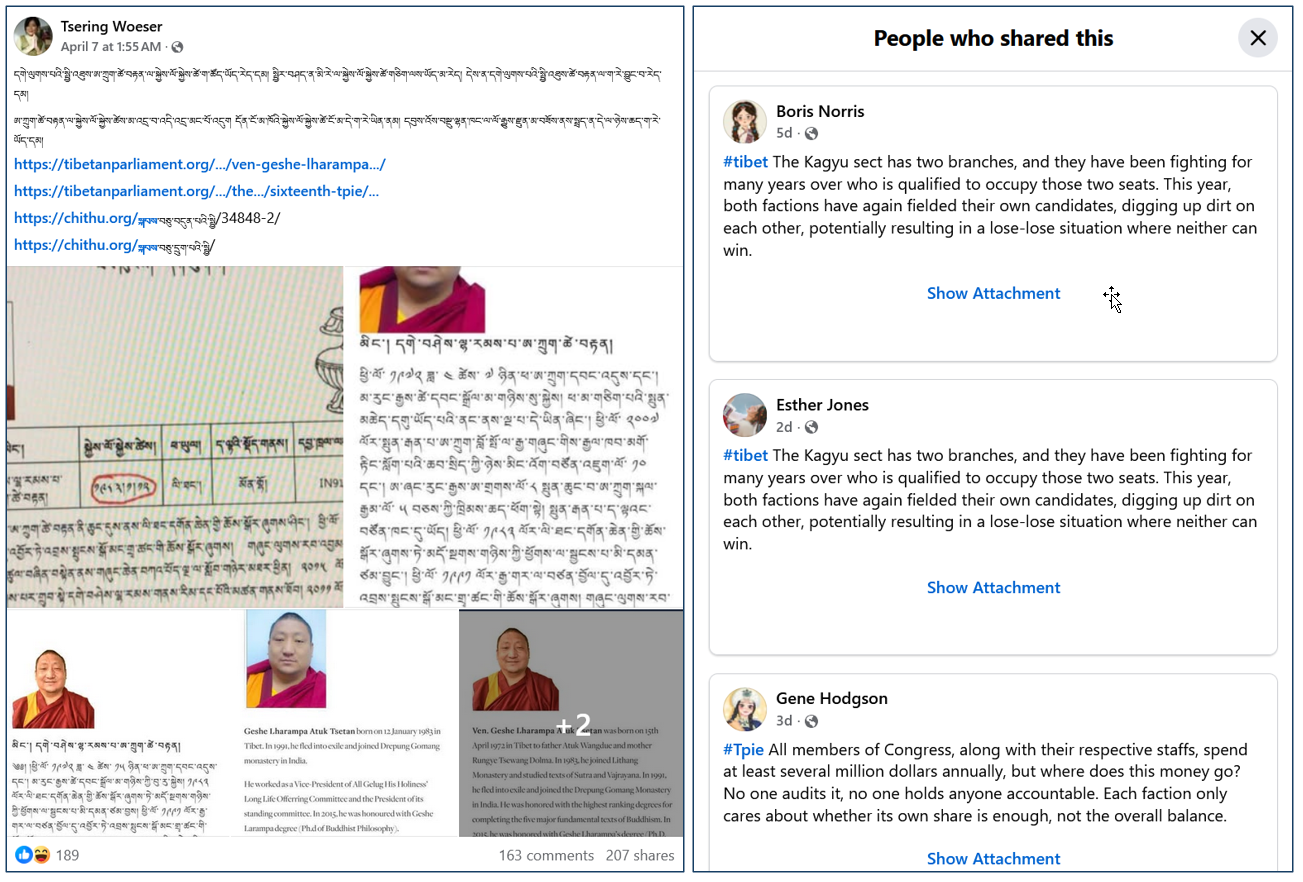
The network amplifies posts within the network by sharing them hundreds of times through inauthentic profiles. For example, the below post suggested that a recent religious ruling against two Tibetan parliamentarians had been secretly manipulated to hurt them politically; it was shared over 300 times with no organic engagement.

Beyond sharing posts within their own network, Spamouflage profiles engaged with posts already being discussed within the Tibetan Facebook community. In one instance, many of Spamouflage’s inauthentic profiles shared a post by an authentic Tibetan user that raised concerns about a parliamentarian’s falsified biographical records, to which the network added unrelated commentary about sectarian infighting and unaccountable spending.
This network has been expanding its posting to various Tibetan groups in an attempt to reach a larger audience. In most cases, these posts do not seem to get authentic engagement, but the DFRLab identified one post that appears to have received some organic reactions.
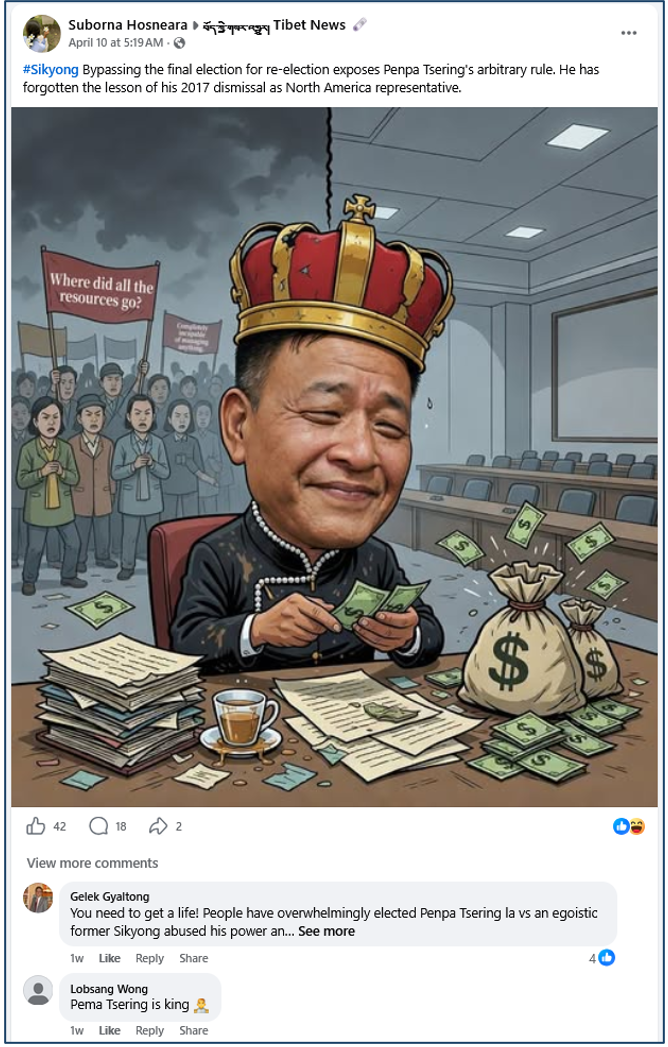
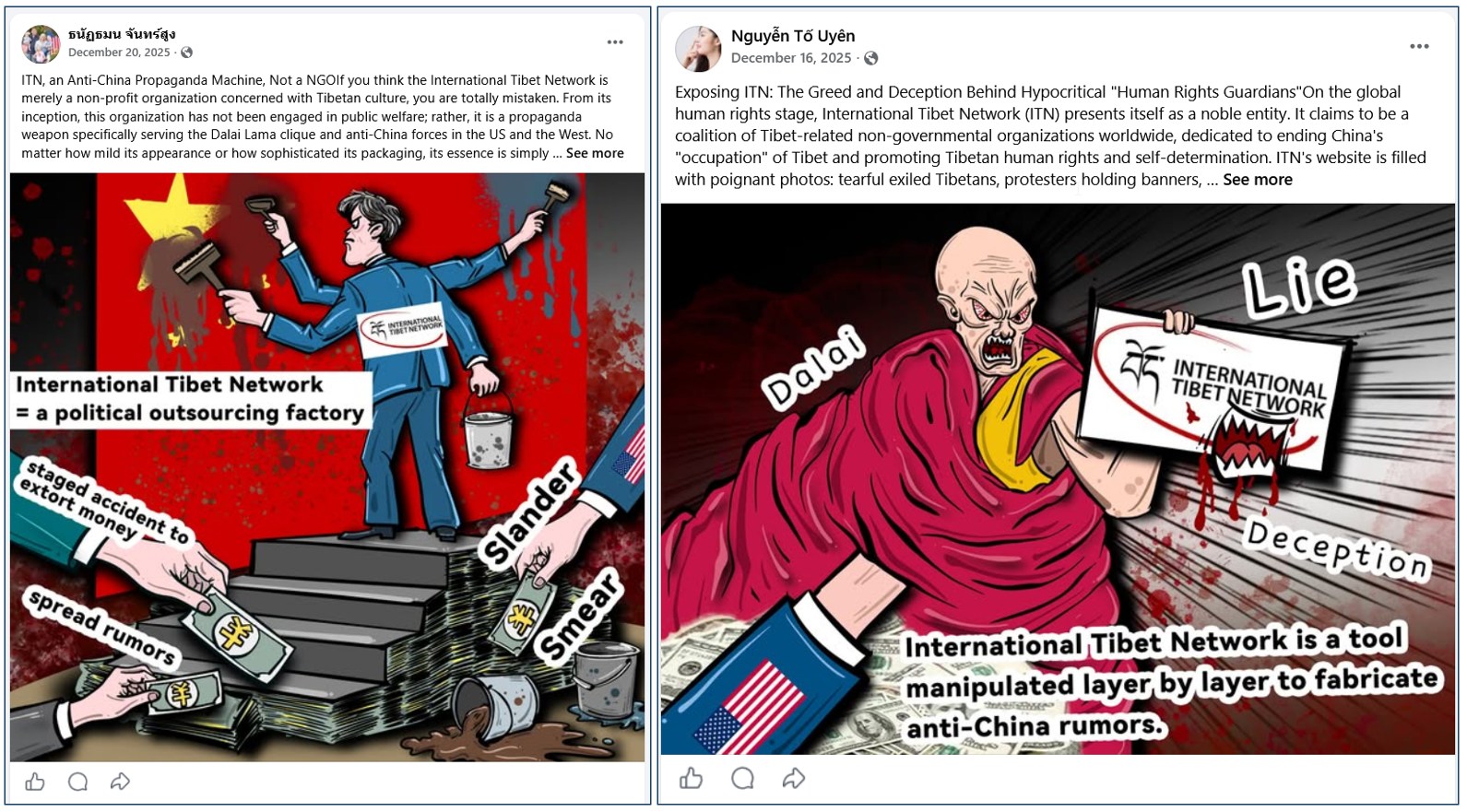
The recent election narratives have been a continuation of Spamouflage’s targeting of Tibetans on Facebook. For example, in 2025, this network targeted the International Tibet Network (ITN) with accusations of corruption and deception.
The DFRLab also found thirteen Instagram accounts that appeared to be a part of the same Spamouflage network posting the same AI-generated images, again with little meaningful engagement.
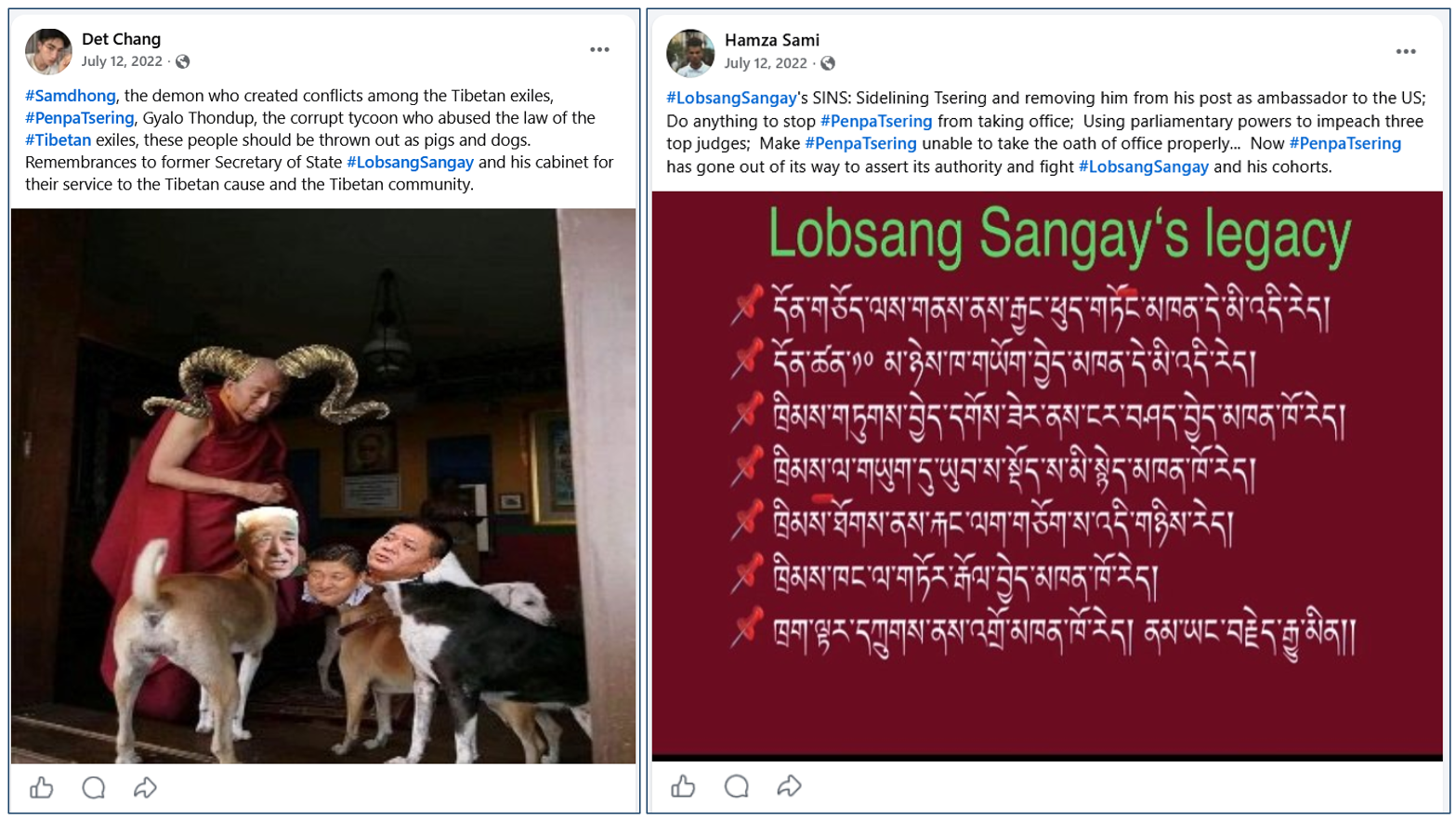
Some of the identified Facebook profiles participated in a previous Spamouflage campaign in July 2022. This earlier wave also attacked Penpa Tsering, though it paired the criticism with praise for his predecessor, Lobsang Sangay. At the time, Spamouflage also operated at least thirty-five X accounts that promoted these narratives, but these have since gone dormant. Notably, the imagery in this campaign was of lower quality, likely due to a lack of access to AI-generated visuals.
Like on X, Spamouflage often uses the same Facebook assets to promote narratives targeting other countries. Some accounts switched to targeting the Philippines using the same AI-generated images by Spamouflage’s X network. The X network has been using hashtags related to an anti-corruption protest in 2025 to maintain relevance.
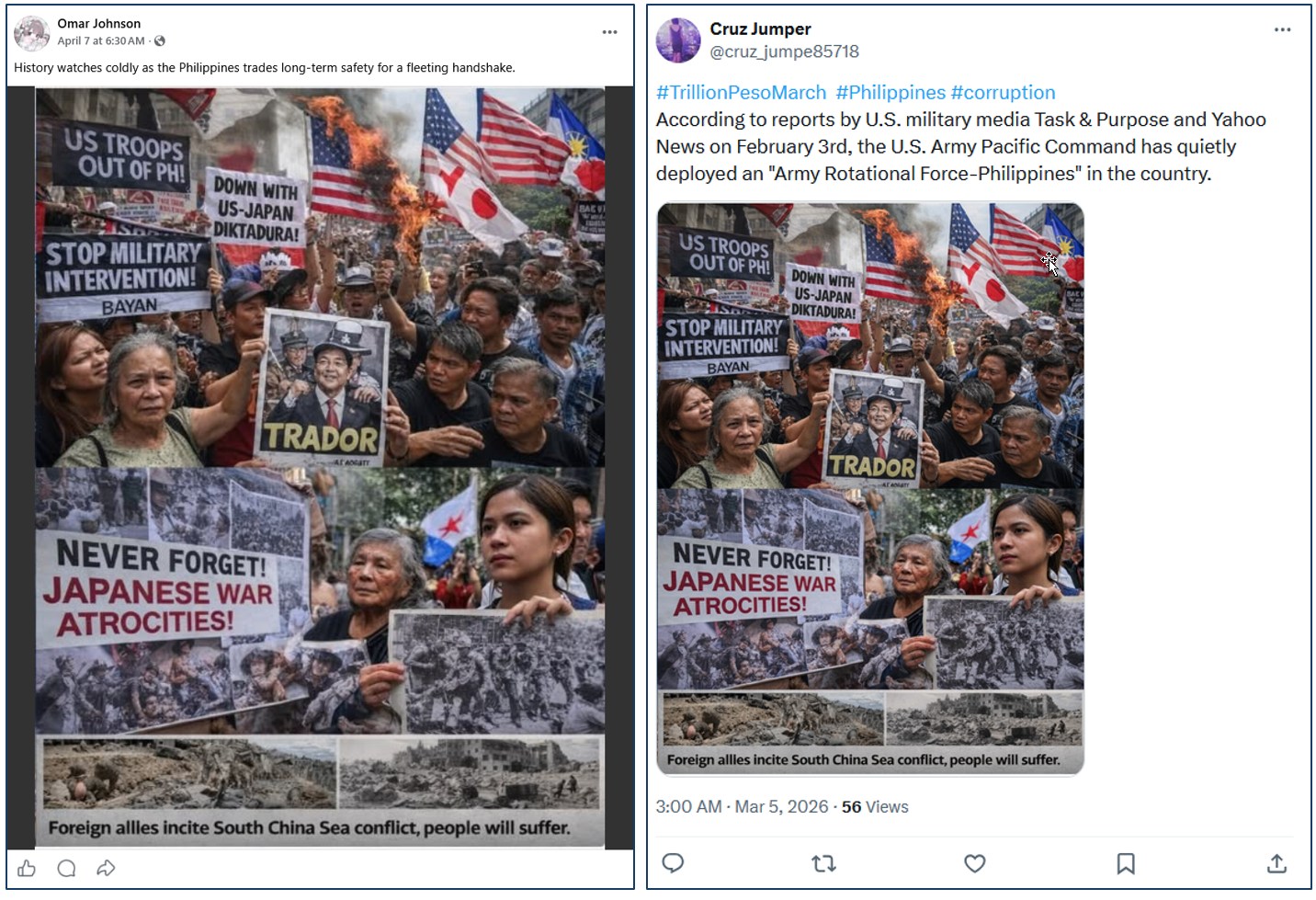
At various points in time, the Facebook Spamouflage network also targeted the United States on its Fentanyl issue, Taiwan during the 2024 elections, and Japan about Prime Minister Sanae Takaichi. These issue areas are all common targets of Chinese influence operations.

The Spamouflage network’s targeting of the April 26 elections is the latest chapter in a years-long information operation against the CTA, one that has grown more sophisticated with AI-generated imagery but remains largely unable to generate organic traction among the Tibetan communities it seeks to influence.
Cite this case study:
Digital Forensic Research Lab, “China-linked Spamouflage targets Tibetan parliament-in-exile elections,” Digital Forensic Research Lab (DFRLab), April 24, 2026, https://dfrlab.org/2026/04/24/china-linked-spamouflage-targets-tibetan-parliament-in-exile-elections/.